
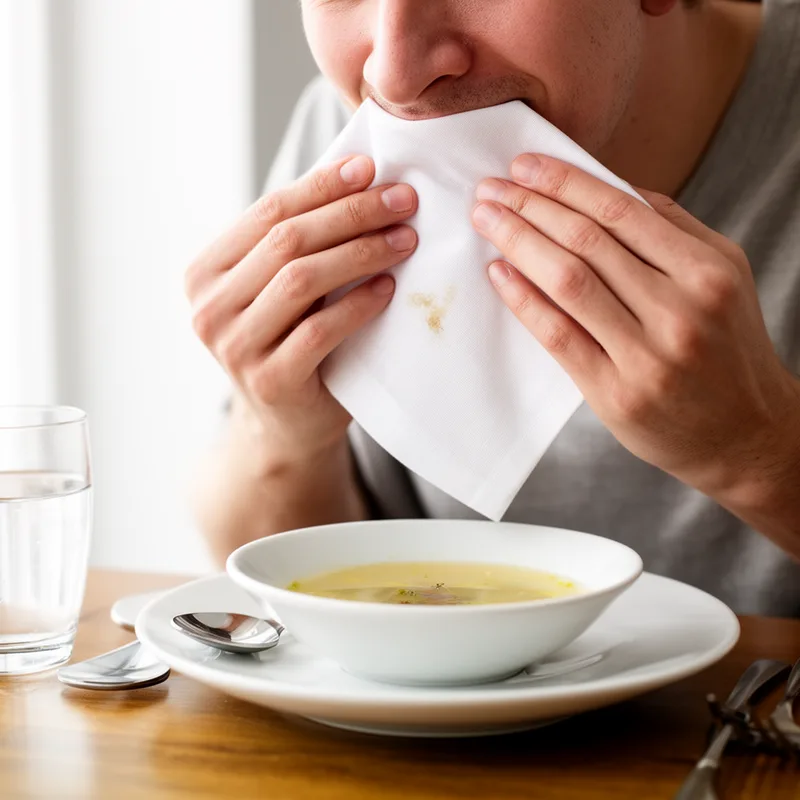
table napkin
- noun
- /ˈteɪbəl ˈnæpkɪn/
 :
servilleta
:
servilleta
- Annabelle carefully used her table napkin to dab the front of her pomona green silk.
Examples
-
Marilyn helped Irene to her feet and, with a wetted table napkin, wiped away the blood that had been coming out of her nose.
Academic text (2009) -
And might I ask you not to come down to breakfast in your dressing gown, or not to use it as a table napkin if you do ?
-
Karen's parents' house, we see hands carefully wrapping a white linen table napkin around some object.
Fiction book (1990) -
He played with his table napkin as I spoke, rearranging it carefully on his lap, although this had been done once by the waiter.
Fiction book (1994) -
At dinner, she placed the table napkin neatly on her lap to keep her dress clean.
-
He wiped his mouth with the table napkin after enjoying his dessert.
-
Using a table napkin is important for maintaining proper table manners during meals.
Synonyms

 168
1.0
168
1.0

A small piece of cloth or paper used at meals to wipe the mouth and hands
 1
5.0
1
5.0
A small cloth or paper used at meals to wipe your mouth and protect your clothes
 1
1.0
1
1.0
A large piece of cloth or paper people use at dinner to protect clothes and wipe the mouth and hands

A small cloth used to protect clothes and hold food during tea
How Formal

Surface Forms
Morphology
The meaning is directly derivable from combining 'table' (the place/setting for meals) with 'napkin' (a small cloth or paper for wiping hands), so the compound simply specifies a napkin used at the table. This straightforward noun+noun composition is common across languages and follows normal English compounding, so a B1 learner who knows both words will readily understand it.
Etymology
Table napkin comes from the simple picture of a small cloth (napkin) placed at the table or on your lap to wipe your mouth and protect your clothes. That's why it means 'a small piece of cloth or paper used at a meal'.