
synthetic cubism
- noun
- /sɪnˈθɛtɪk ˈkjuːbɪzəm/
- Specialized
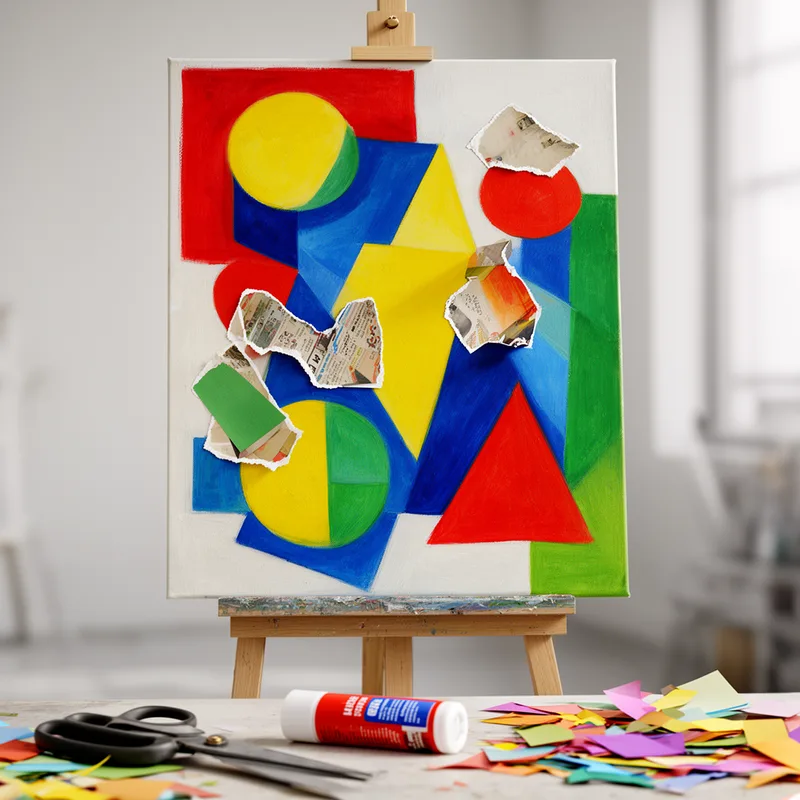
- Synthetic cubism introduced collage and brighter colors into the Cubist style.
Examples
-
Art historians often distinguish between analytic and synthetic cubism when discussing early twentieth-century paintings.
-
Many of Picasso's works from 1912 demonstrate the features of synthetic cubism.
-
Pablo Picasso was a pioneer of synthetic cubism.
-
The synthetic cubism movement emerged in the early 20th century.
-
Synthetic cubism is characterized by the use of simpler shapes and brighter colors in artwork.
-
Artists working in synthetic cubism often incorporate collage elements to enhance their compositions.
-
Many famous artists, including Braque, embraced synthetic cubism to revolutionize modern art.
Surface Forms
Morphology
The phrase is partly compositional: a learner who knows 'synthetic' (bringing parts together) and 'cubism' can infer it names a variety or phase of Cubism that combines elements. However, the specific art‑historical sense (the later phase with collage, simpler shapes and brighter colors) is specialized and not fully predictable from the parts (and 'synthetic' can also mean 'artificial'), so full understanding requires prior exposure.
Etymology
Synthetic cubism gets its name from the word synthetic, which means 'made from parts'; artists began to build pictures by gluing bits of paper, a technique called 'collage', and by using simple shapes and bright colors. This image of 'putting together' small parts explains why this later part of cubism looks simpler and brighter today.

