
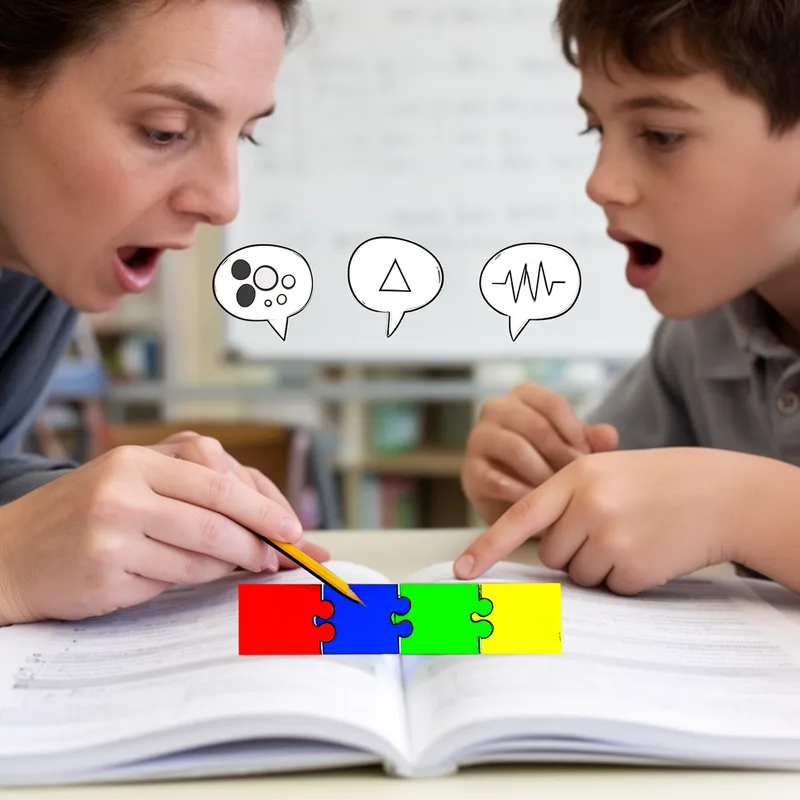
to syllabicate
- verb
- /ˈsɪl.ə.bɪ.keɪt/
- Specialized
- The teacher asked the students to syllabicate the word 'banana' into its three syllables.
Examples
-
Moreover, since the children begin to read letter by letter in the phonics method, participants noted that it was more common to see the students syllabicating when they read sentences.
Academic text (2015) -
"Ar-yen-ti-na," the fat man syllabicated.
Fiction book (1997) -
When learning new vocabulary, it's helpful to syllabicate each word to understand its pronunciation.
-
In phonics lessons, children often syllabicate words to improve their reading skills.
Synonyms

To divide a word into parts that each have a vowel sound

To say a word in separate sound parts out loud
How Formal

Surface Forms
Morphology
Etymology
Syllabicate comes from the same root as syllable, which is a unit or 'beat' of sound in a word. The ending -ate turns it into a verb, so to syllabicate is to 'divide' a word into its syllables or beats. A helpful way to remember this is to imagine clapping for each 'beat' as you say a long word.

