

to swoon
 27
7.7
27
7.7

- verb
- /swun/
- Watching him trot after them, eager as a puppy, Kate felt her heart swoon with love for her sweet, vulnerable child.
Loading YouTube…
Watch on YouTubeLots of people project lots of goodness onto the communal narcissistic people and they often surround themselves with people who swoon over their goodness.
- Lots of people project lots of goodness onto the communal narcissistic people and they often surround themselves with people who swoon over their goodness.
- So this that's, I mean, fuck, that's makes me swoon.
Examples
-
When she first met him, she'd gushed and practically swooned at his good looks.
Fiction book (1994) -
When she saw the handsome actor walk by, she couldn't help but swoon with excitement.
-
I swoon almost with fear.
-
"At this, the lady did swoon.
-
For a moment, I had a desire to swoon against my husband and have him bring me to.
Academic text (2002) -
A few lines of Shakespeare, and you expect a girl to swoon.
-
"I hung my head, swooning, and dropped my arms to my side.
Fiction book (1994) -
I screamed, and I think I may have swooned.
-
When Whitey felt their attention, warm like a spotlight upon him, he almost swooned.
Fiction book (1999) -
Of course, having a sixteen-year-old daughter who practically swooned at the sight of the man didn't help matters.
Fiction book (1991)
Synonyms
 188
3.7
188
3.7
To faint or lose consciousness suddenly
 151
3.2
151
3.2
Lose consciousness for a short time
 6
9.0
6
9.0
To suddenly faint or fall unconscious
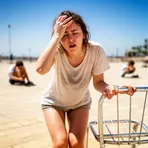
Feeling very weak and about to faint
How Overcome

Surface Forms
Etymology
To swoon comes from an old English word meaning 'to be weak' or 'to die'. That's why to swoon today means 'to faint', often because of strong emotion or physical weakness.