
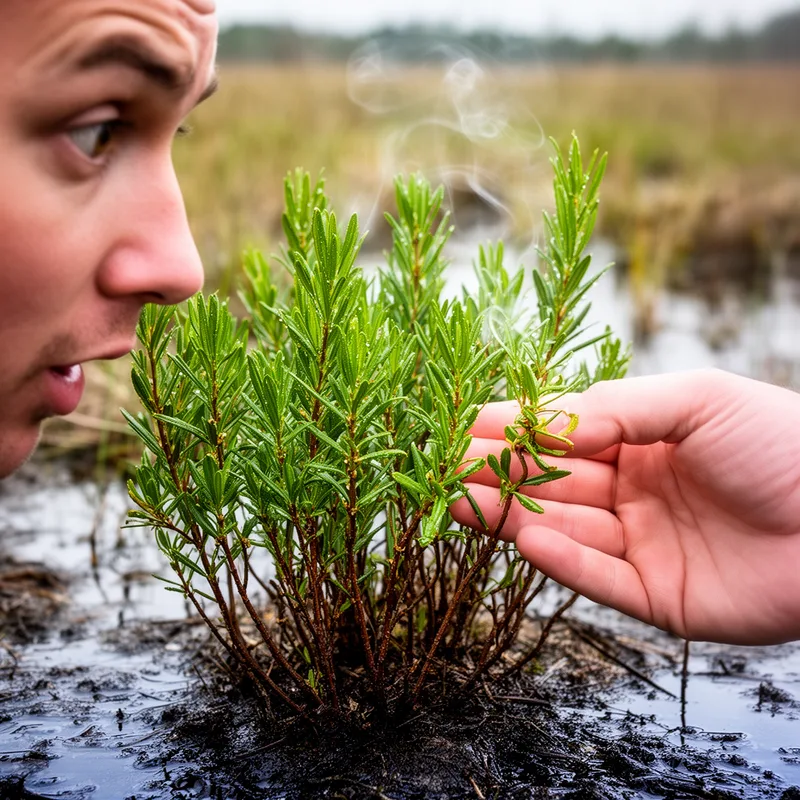
sweet gale
- noun
- UK
- In wetland areas, you can often find sweet gale growing alongside other shrubs and wildflowers.
Examples
-
Many birds are attracted to sweet gale due to its unique leaves and environmental benefits.
-
Some of the shrubs are black chokeberry, blue huckleberry, silky willow, swamp azalea, and sweet gale.
Academic text (2011) -
The gardener planted sweet gale in the boggy section of the landscape to add variety and fragrance.
Synonyms
A small shrub with a strong smell and bitter leaves that grows in bogs

A small bush with bitter, fragrant leaves that grows in wet places
Surface Forms
Morphology
sweet + gale
This is a lexicalized common name for a shrub; although 'sweet' signals fragrance, the head 'gale' does not transparently denote a plant or 'shrub of bogs' (and is otherwise known as 'strong wind'), so the overall meaning cannot be derived from the parts. Common names for plants are often arbitrary or historically fixed, so a B1 learner who knows the constituent words would not reliably infer the botanical meaning.
Etymology
Sweet gale may come from how people once talked about the plant: they called it sweet for its 'pleasant smell' and gale from an old word for a bog shrub. So the name points to a shrub with bitter, scented leaves that people used to flavor ales and keep insects away.

