

sweet clover
- noun
- /swit ˈkloʊvər/
- To revitalize the pasture, he decided to sow sweet clover as a cover crop.
- yellow sweet clover
Examples
-
There were wildflowers, and later in the season there would be fields of sweet clover.
Fiction book (1990) -
In 1945, the idea of using a derivative of coumarin, the active substance in sweet clover, as a rodenticide was developed.
Academic text (2014) -
Its discovery dates back to the prairies of Northern America in the 1920s, where many cattle died of hemorrhage linked to their 'sweet clover hay' diet.
Academic text (2014) -
Farmers often plant sweet clover to improve soil quality and enhance crop yields.
-
The garden was filled with vibrant sweet clover that helped attract beneficial insects.
Synonyms
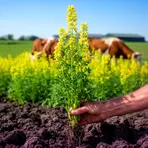
A plant with small yellow flowers that farmers grow to feed animals and improve soil

A plant like sweet clover that farmers grow for hay and to improve soil
Surface Forms
Morphology
This is a straightforward adjective+noun compound: 'sweet' modifies 'clover', so a learner who knows both words can infer it refers to a kind of clover with a sweet/aromatic quality. They may not know the specific botanical genus or agricultural uses, but the basic referent as a particular type of clover is directly compositional and immediately understandable.
Etymology
Sweet clover gets its name from the plant's sweet smell and from leaves that look like ordinary clover. Farmers noticed the pleasant scent when it was cut for 'hay', so the words sweet and clover were put together and the name stuck.

