
surimi


 1
6.0
- noun
- /suˈriːmi/
- Specialized
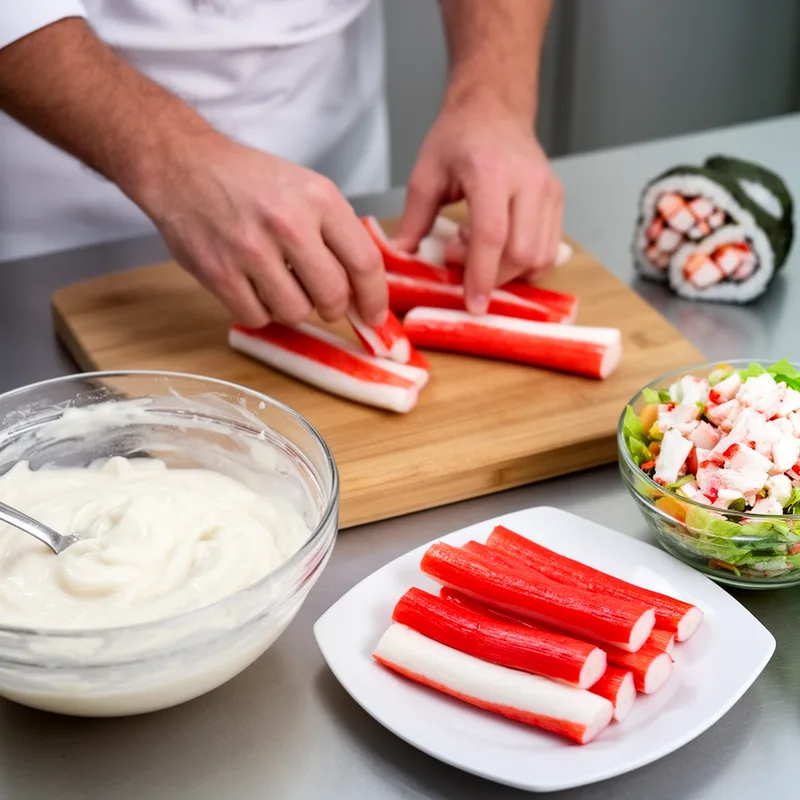
- You can find surimi in many seafood salads as a cost-effective alternative to real crab.
- surimi production
- surimi prices
- frozen surimi
Examples
-
With the Hokkaido technological developments, demand for frozen surimi grew in Japan's food processing industry.
Academic text (1994) -
Rapid chilling of the fish at harvest is essential for a quality surimi product.
Academic text (1991) -
The same lot of surimi was used in each experiment for both species.
Academic text (1993) -
Japanese domestic demand for surimi has continued to exceed domestic supply.
Academic text (1994) -
As previously noted, domestic demand outpaced available surimi supply in Japan during 1990.
Academic text (1994) -
Color would be less of a problem in a product that combined the surimi with machine-separated blue crab meat.
Academic text (1991) -
In part, due to speculation and uncertainty about future supply, surimi prices rose dramatically in 1977.
Academic text (1994) -
The annual average price for high-grade at-sea surimi remained high through 1980.
Academic text (1994) -
During 1976-86, U.S. imports of surimi rose from about 1 million to 13.4 million pounds.
Academic text (1991) -
Frankfurters containing menhaden mince or surimi had very low levels of nitrosodimethylamine (Pensebene and Fiddler, 1988).
Academic text (1991)
Surface Forms
Etymology
Surimi comes from Japanese suri 'to grind' and mi 'meat', so it originally meant 'ground meat'. Today surimi is a fish paste made by grinding fish and shaping and flavoring it to imitate crab and other seafood.