
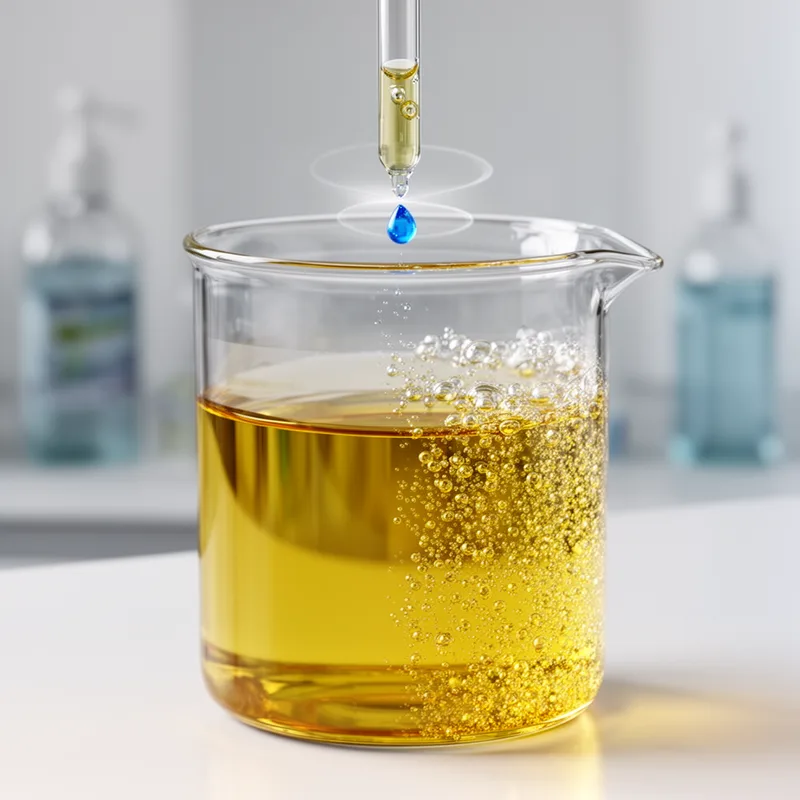
surface-active agent
- noun
- /ˈsɜrfɪs-ˈæktɪv ˈeɪdʒənt/
- Specialized
- A surface-active agent is often added to detergents to help dissolve oils and grease.
Examples
-
Many surface-active agents are used in detergents and personal care products to improve cleaning efficiency.
-
Painters sometimes use a surface-active agent to help paints spread evenly across surfaces.
-
The laboratory tested the effectiveness of the new surface-active agent in reducing water surface tension.
-
A surface-active agent is essential for creating stable emulsions.
-
Many surface-active agents are used in detergents.
-
A surface-active agent is often added to detergents to help dissolve oils and grease.
-
The laboratory tested the effectiveness of the new surface-active agent in reducing water surface tension.
Synonyms

 3
8.5
3
8.5

A chemical that makes a liquid spread and mix more easily
A chemical that makes a liquid spread more easily on a surface

A chemical that helps a liquid spread or soak in more easily
Surface Forms
Morphology
The phrase is compositionally built from 'surface' + 'active' and 'agent', so a learner who knows those words can infer it denotes a thing/substance that acts at surfaces (i.e., something that works on a surface). However, the precise technical sense — that it specifically reduces surface tension and stabilizes emulsions — is specialised and not fully predictable from the constituents for an average B1 learner.
Etymology
Surface-active agent literally names a chemical that is active at a liquid's surface and works as an agent to help liquids spread and mix. So, the name explains the meaning: a substance that 'makes liquids spread or mix more easily'.