
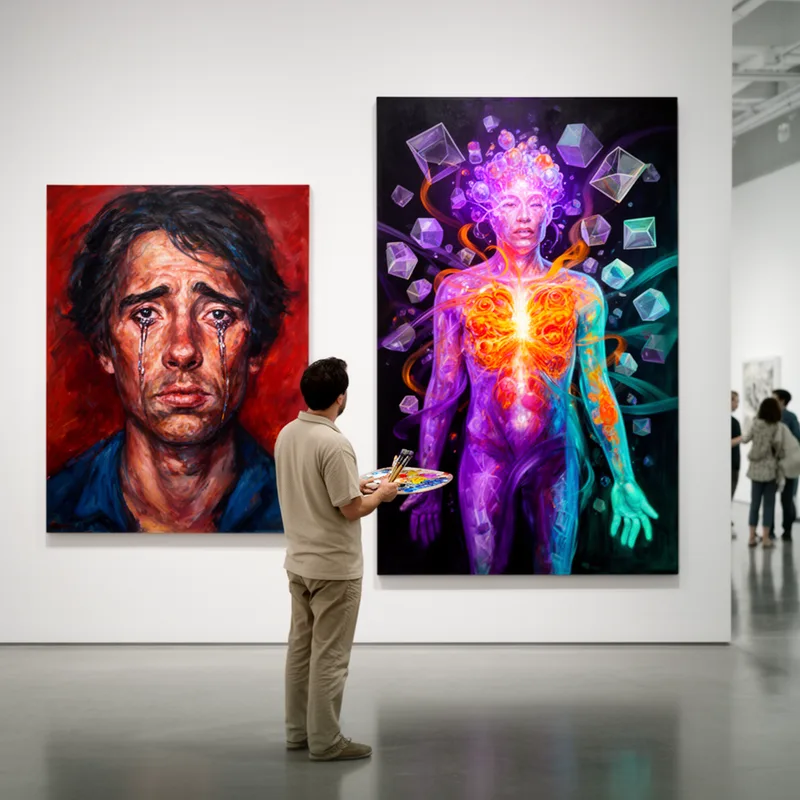
supra expressionism
- noun
- /ˈsuːprə ɪkˌsprɛʃəˈnɪzəm/
- Literature
- The exhibition showcased paintings from the supra expressionism movement, challenging viewers with their radical new forms.
Examples
-
Interest in supra expressionism surged in the 20th century as artists sought to break traditional expressive boundaries.
-
Many critics believe that supra expressionism took the emotional core of expressionism and pushed it to conceptual extremes.
-
What is supra expressionism?
-
The concept of supra expressionism challenges traditional artistic boundaries.
-
Many contemporary artists are influenced by supra expressionism, as it encourages innovative approaches to creativity.
-
The gallery featured several pieces that exemplified supra expressionism, emphasizing new ways to convey human experience.
-
Critics often praise supra expressionism for its ability to expand the boundaries of artistic expression beyond mere emotion.
Surface Forms
Morphology
supra + expressionism
The sense 'beyond/transcending expressionism' is directly compositional from 'supra' (a Latin-derived element meaning 'above' or 'beyond') + 'expressionism', so the overall meaning is predictable from the parts. Note that 'supra' is relatively rare as a standalone English word and may be unknown to some B1 learners, but if they know both constituents the interpretation is straightforward.
Etymology
Supra expressionism may come from the part supra, meaning 'above', joined to the art word expressionism, so you can picture art that sits above ordinary emotional art. That's why it means art that tries to go 'beyond' the usual limits of expressionism.

