
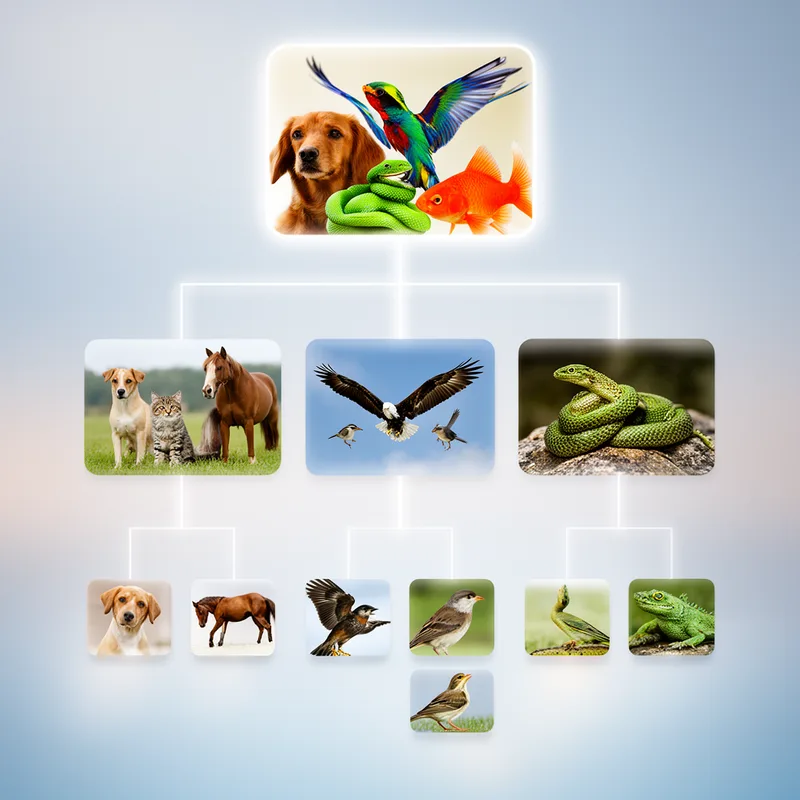
superordination
- noun
- /ˌsuːpərɔːrˈdeɪʃən/
- Specialized
- In discussions of organizational structure, superordination refers to the relationship between management and their subordinates.
- superordination and subordination
Loading YouTube…
Watch on YouTubeIs it a case of subordination and superordination where maybe philosophy stands above that discipline and tells it what to do?
- Is it a case of subordination and superordination where maybe philosophy stands above that discipline and tells it what to do?
Examples
-
Is it a case of subordination and superordination where maybe philosophy stands above that discipline and tells it what to do?
-
The language by which a society expresses human relationships of subordination and superordination may also become available for the description of status inequalities between men and their gods.
Academic text (1990) -
Following Durkheim, they argued that even the categories of subordination and superordination in logic had their basis in new forms of social domination (5, p. 44 21).
Academic text (1998) -
The concept of superordination helps us understand how certain ideas can be classified under broader categories.
-
The superordination of certain species in the food chain dictates how they interact with other organisms.
Synonyms

 53
7.1
53
7.1

Being higher than others in power or importance
 4
7.9
4
7.9
Being better than others in an area, like skill or success


 1
9.9
1
9.9
A quality of being too much or of being better than others

A general word that includes more specific words like car and bicycle
Antonyms

How High

Surface Forms
Morphology
superordination = superordinate (transparent) = superordinate + ion
A regular nominalization from the adjective 'superordinate' using the productive suffix '-ion', yielding the state or relation of being superordinate.
Etymology
Superordination comes from the parts super- ('above') and order ('rank' or 'group'), so it literally means being 'above the order' or in a higher class. That's why superordination today describes the relation of something that belongs to a higher rank or category.