
summer cypress
- noun
- /ˈsʌmər ˈkaɪprəs/
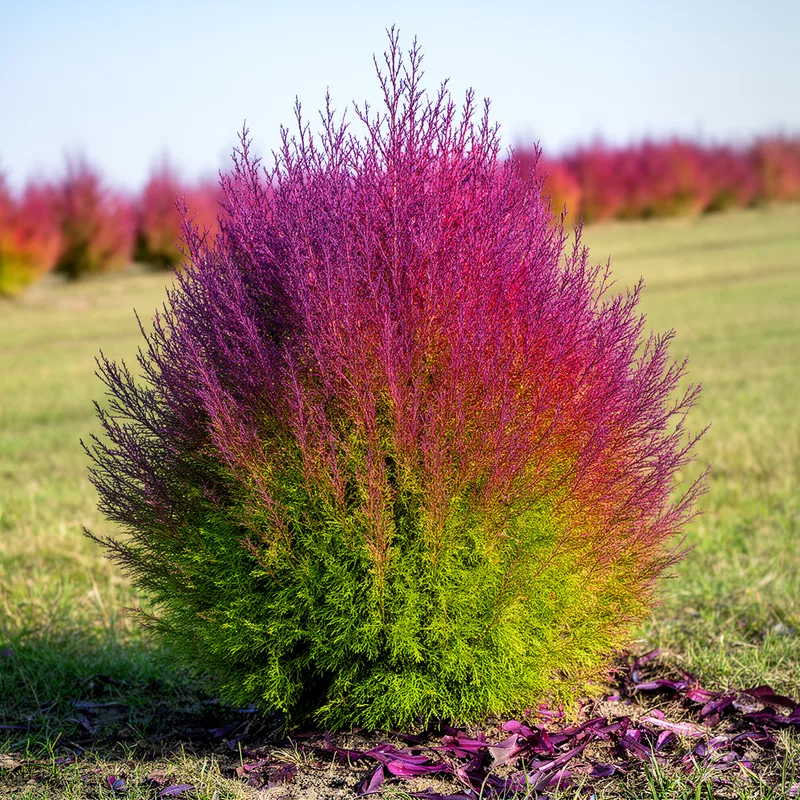
- In autumn, the summer cypress transforms from green to a vibrant purple-red.
Examples
-
Farmers planted rows of summer cypress along the field for erosion control.
-
The summer cypress is beautiful in the fall.
-
The summer cypress adds brilliant color to gardens in the fall.
-
Many gardeners love the summer cypress for its vibrant colors.
-
The summer cypress is known for its vibrant green leaves that turn purple-red in autumn.
-
In many gardens, the summer cypress adds a stunning touch of color as the seasons change.
-
During the fall, the summer cypress transforms, creating a beautiful display of deep purples and reds.
Synonyms

A dense bushy plant with leaves that turn red purple, often grown in gardens or to stop soil erosion

A plant with many branches whose leaves turn red-purple in autumn

A shrub with many branches whose leaves turn purple-red in autumn

A bush from Europe and Asia with many branches and leaves that turn red in autumn

A bushy garden plant with bright green leaves that turn red in autumn and grows well in hot dry places
Surface Forms
Morphology
The noun‑noun composition signals a plant and a seasonal association, so a B1 learner who knows 'summer' and 'cypress' will likely infer it refers to a kind of plant (a cypress‑like plant connected to summer). However, the specific species identity and detailed traits (Kochia scoparia, not a true cypress, foliage turning purple‑red) are not predictable from the constituents and the use of 'cypress' may mislead, so the transparency is only partial.
Etymology
Summer cypress is named for how it looks: its fine branches look like a small cypress and the plant is 'green' in summer before 'turning purple-red' in autumn. That's why the name points to this plant and its seasonal color change.

