
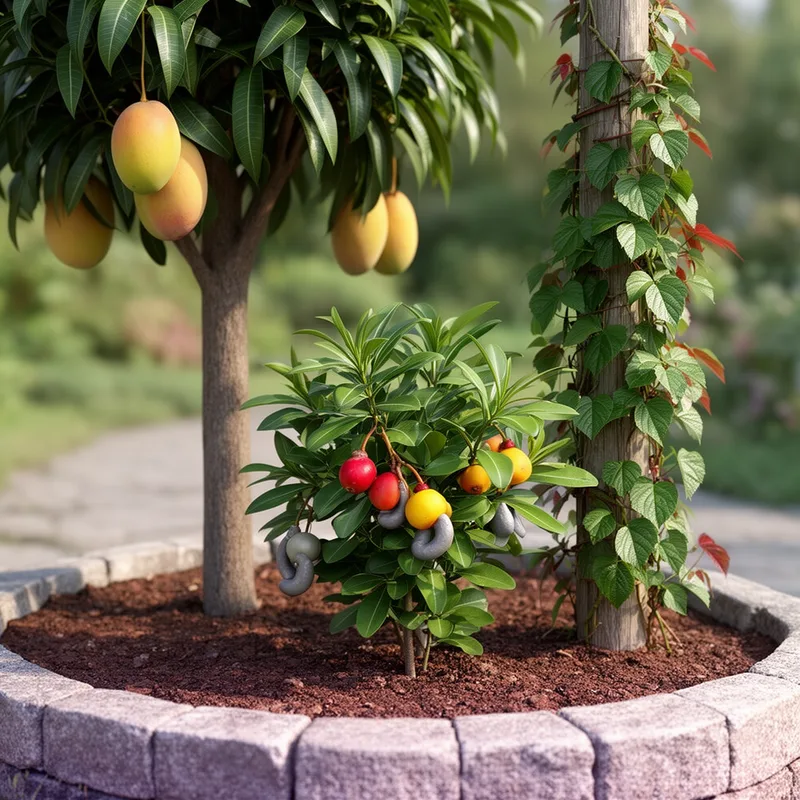
sumac family
- noun
- /ˈsuːmæk ˈfæmɪli/
- Specialized
- Poison ivy is a notorious member of the sumac family.
Examples
-
The mango tree belongs to the sumac family, along with cashew and pistachio.
-
Many members of the sumac family produce resin that can be toxic to humans.
-
The sumac family includes many interesting plants.
-
Many members of the sumac family are used in cooking.
-
Poison ivy is a notorious member of the sumac family.
-
The mango tree belongs to the sumac family, along with cashew and pistachio.
-
Many members of the sumac family produce resin that can be toxic to humans.
Synonyms
A family of flowering trees, shrubs, and vines including mango and cashew
Surface Forms
Morphology
sumac + family
The meaning is compositional: 'sumac' (a plant) combined with 'family' (a biological grouping) yields 'the plant family that includes sumac', which a learner can infer from the parts. The 'X family' taxonomic pattern is common across languages, so a B1 learner who knows both constituents should understand this usage.
Etymology
Sumac family comes from the bright, red-berry shrub called sumac. The word family was used to mean a 'group of related plants', so the phrase now names a group that includes edible trees like mango and cashew and poisonous ones like poison ivy.

