
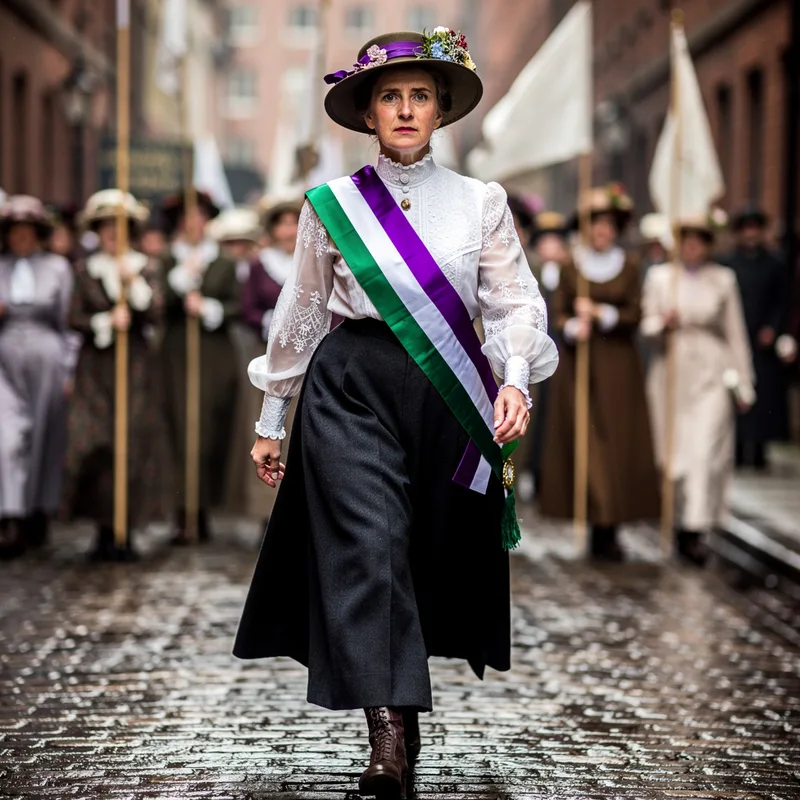
suffragette
 8
8.2

- noun
- /ˌsʌfrəˈdʒɛt/
- Archaic
- Mrs. Rice marched as a suffragette and followed politics closely.
- militant suffragette
- Suffragette movement
- suffragettes marched
Loading YouTube…
Watch on YouTubeBut why did Alice Hawkins Suffragette want the vote?
- But why did Alice Hawkins Suffragette want the vote?
- That's not what the Chartists and the suffragettes fought for.
- As the famous suffragette battle cry put it, they want deeds, not words.
- Well, Gottlieb says some stuff about the suffragettes that I didn't know.
Examples
-
The women's rights movement began with the moral suffragette argument that female citizens should have the same civic opportunities as men.
Blog text (12) -
You see, I am a suffragette after all.
-
As the famous suffragette battle cry put it, they want deeds, not words.
-
Only men then could vote, and the suffragettes would be there to demonstrate.
Blog text (8) -
I try to wear purple and green on election day to represent the suffragettes and their struggle to get the vote for women.
Blog text (14) -
The reason why the suffragettes went to all that trouble to get the vote was because they wanted to, they themselves, be treated as grownups and decide their own destiny.
-
The suffragettes died, were imprisoned, and force-fed in prisons to win the right to vote.
Blog text (8) -
In 1906, a young Gandhi witnessed British Suffragette Emmeline Pankhurst leading women in passive resistance and hunger strikes.
Blog text (28) -
Ethel Smyth is an interesting composer of this period because of her friendship with suffragette Emmeline Pankhurst and her musical contribution to the efforts of the Women's Social and Political Union (WSPU).
Academic text (2004) -
As an outspoken suffragette, she dedicated her life to securing voting rights for women.
Synonyms
 4
6.8
A person who works to win voting rights, especially for women
Surface Forms
Morphology
Etymology
The word suffragette comes from suffrage ('the right to vote') plus the French ending -ette, which means 'small' or shows a female form. In the early 1900s this name was used for women who campaigned, sometimes with strong action, to win the vote, so a suffragette is a woman who fought for voting rights.