
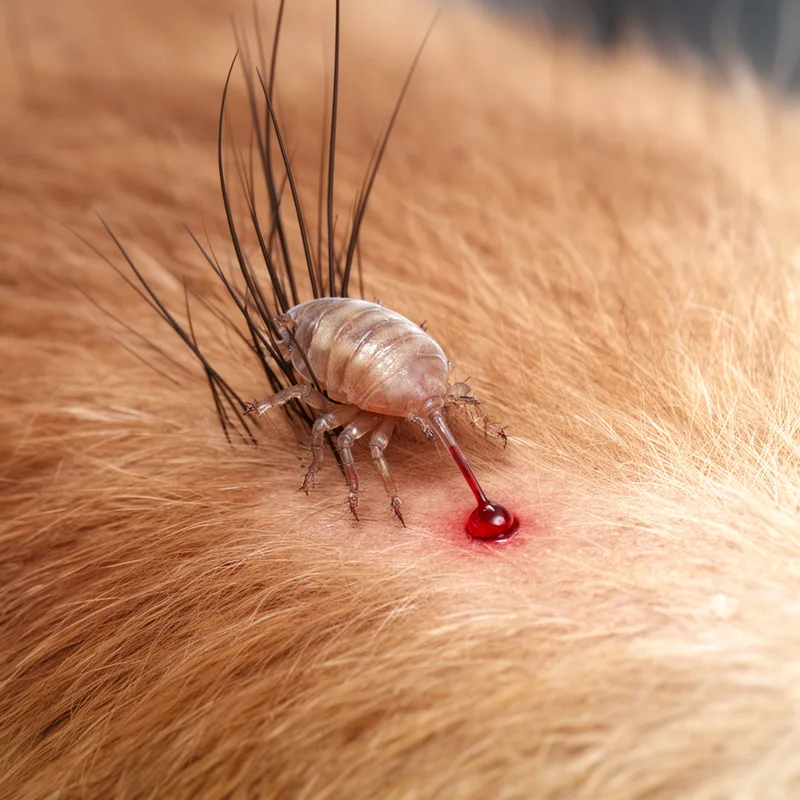
sucking louse
- noun
- /ˈsʌkɪŋ laʊs/
- Specialized
- The veterinarian identified the parasite as a sucking louse, which requires immediate treatment.
Examples
-
A sucking louse can cause irritation and anemia in livestock if not controlled.
-
Birds and mammals are common hosts for the sucking louse due to their warm-blooded nature.
-
The sucking louse is often found on cats.
-
Many animals suffer from sucking lice infestations.
-
The veterinarian identified the parasite as a sucking louse, which requires immediate treatment.
-
A sucking louse can cause irritation and anemia in livestock if not controlled.
-
Many animals suffer from sucking louse infestations that can lead to health issues.
Synonyms


 1
9.9
1
9.9
A group of small insects that live on mammals and suck their blood
Surface Forms
Morphology
The compound is a straightforward adjective+noun combination: 'sucking' (performing sucking) modifies 'louse' (a parasitic insect), so a learner who knows both words can infer it refers to a louse that feeds by sucking (e.g., blood). This compositional, descriptive pattern is common across languages and follows regular English modifier+head morphology, making the meaning predictable to B1 learners.
Etymology
The compound noun sucking louse shows a simple picture: the word sucking tells us it feeds by sucking blood, and louse names a small 'parasite' that lives on animals. So the name means a tiny 'parasite' that feeds on the blood of birds or mammals.