
suborder Megachiroptera
- noun
- Archaic
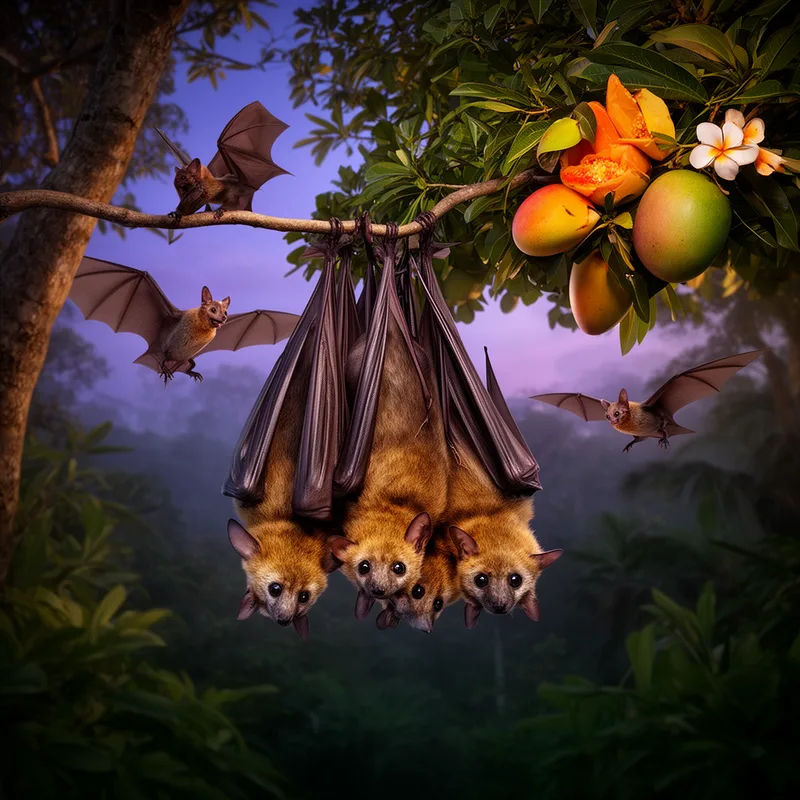
- The suborder Megachiroptera includes the flying foxes found across Asia and Australia.
Examples
-
Unlike the smaller microbats, members of the suborder Megachiroptera typically do not use echolocation.
-
The suborder Megachiroptera is characterized by its large size and fruit-eating habits, making these bats vital for forest regeneration.
-
Scientists study the suborder Megachiroptera to understand their role in pollination and seed dispersal.
-
The suborder Megachiroptera includes many species of fruit bats.
-
Did you know that the suborder Megachiroptera consists mainly of large bats?
-
Researchers have identified several species within the suborder Megachiroptera, which are essential for maintaining healthy ecosystems.
-
Members of the suborder Megachiroptera, such as the black flying fox, are often seen hanging in trees during the day.
Synonyms
Large bats with big eyes that eat fruit and nectar
Surface Forms
Morphology
This is a straightforward taxonomic noun phrase formed by combining the rank 'suborder' with the clade name 'Megachiroptera'; if a learner knows both constituents, the meaning (a suborder of bats, i.e. the large fruit bats) follows directly. Such rank + name constructions are compositional and cross-linguistically common, making the expression transparent to learners who know the parts.
Etymology
Suborder Megachiroptera comes from old words: mega meaning 'large' and chiroptera meaning 'hand-wing'. The image of big bats whose wings stretch from long fingers like a hand helps you remember they are the large fruit bats called flying foxes, so the name points to their size and shape.

