
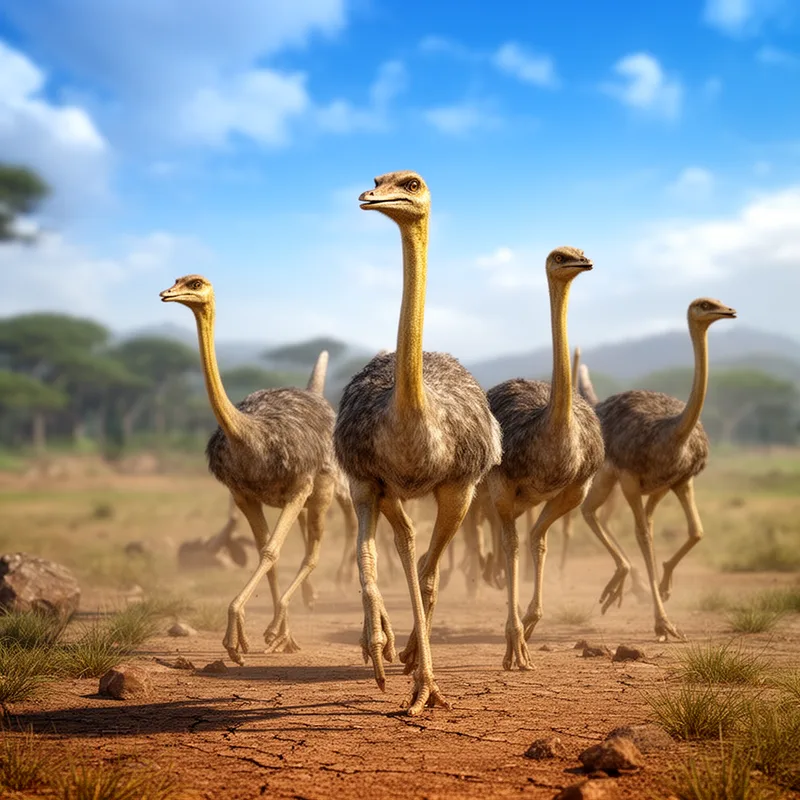
suborder Ornithomimida
- noun
- /ˈsʌbˌɔrdər ˌɔrnɪˈθoʊmɪˌmɪdə/
- Specialized
- The suborder Ornithomimida was characterized by its long legs and toothless beak.
Examples
-
Paleontologists study members of the suborder Ornithomimida to understand the evolution of bird-like dinosaurs.
-
Fossils of the suborder Ornithomimida have been discovered on several continents.
-
The suborder Ornithomimida includes several species of theropods.
-
Many paleontologists study the suborder Ornithomimida for its unique adaptations.
-
Fossils of the suborder Ornithomimida have been discovered on several continents.
-
Paleontologists study members of the suborder Ornithomimida to understand the evolution of bird-like dinosaurs.
-
The suborder Ornithomimida was characterized by its long legs and toothless beak.
Synonyms

A group of extinct light-built dinosaurs that look like ostriches
Surface Forms
Morphology
The phrase is directly compositional: 'suborder' denotes a taxonomic rank and 'Ornithomimida' names the group, so the phrase simply refers to the suborder (taxonomic subgroup) called Ornithomimida. Taxonomic naming is a regular, cross-linguistic pattern, so a B1 learner who knows both constituent meanings would readily infer the overall meaning.
Etymology
Suborder Ornithomimida comes from Greek words meaning 'bird mimic' and was given because these dinosaurs looked like running birds with long legs and beak-like mouths. So the name helps you remember they are 'ostrich-like' or 'bird-like' dinosaurs.

