
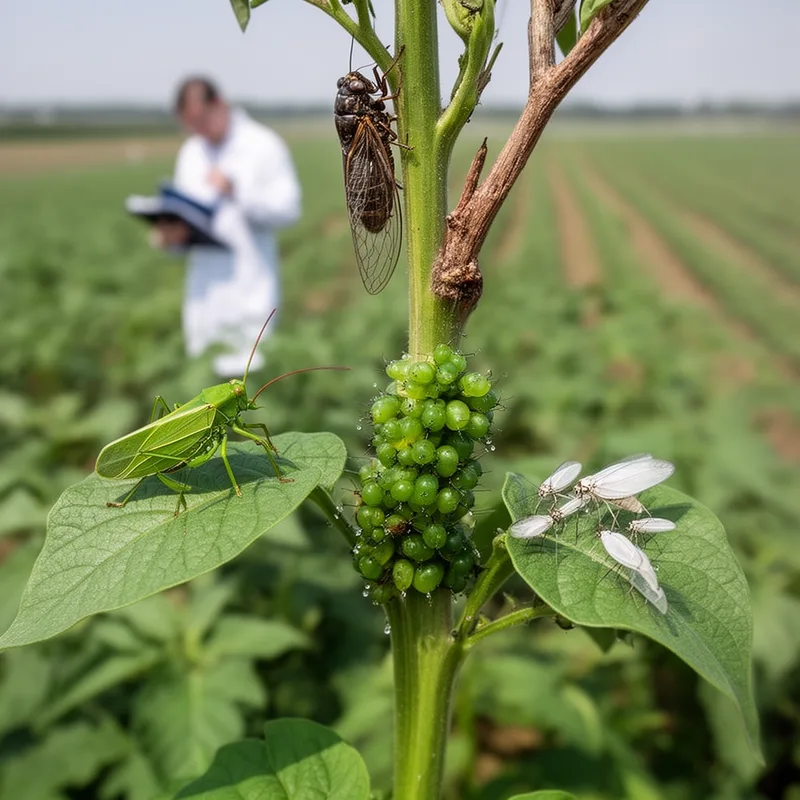
suborder Homoptera
- noun
- /ˈsʌbˌɔrdər ˈhɒmɒptərə/
- Archaic
- The suborder Homoptera includes familiar pests such as aphids and whiteflies.
Examples
-
Many insects in the suborder Homoptera are known for their ability to suck plant sap.
-
Many agricultural scientists study the suborder Homoptera because its members can damage crops.
-
Taxonomists have debated the classification of insects within the suborder Homoptera for decades.
-
The suborder Homoptera includes many plant pests.
-
Agricultural scientists often focus on the suborder Homoptera due to the significant damage its members can inflict on crops.
-
The classification of species within the suborder Homoptera has been a topic of debate among taxonomists for many years.
-
Pests like aphids and cicadas are commonly found in the suborder Homoptera and pose challenges for gardeners.
Synonyms
An old group of insects like aphids, cicadas, leafhoppers, and whiteflies that scientists now place in other groups
Surface Forms
Morphology
The phrase literally combines the taxonomic rank 'suborder' with the taxon name 'Homoptera', so its meaning ('the suborder called Homoptera, a group of insects') is directly derivable from the constituents. This is a compositional, literal naming construction (common cross-linguistically) rather than an idiom, making it transparent to learners who know both words.
Etymology
Suborder Homoptera comes from old Greek words homo and ptera, which together mean 'same wings'. Many insects in this group have front and back wings that look alike, so the name was used to group aphids, cicadas and leafhoppers.

