

subjacent
- adjective
- /səbˈdʒeɪsənt/
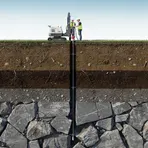
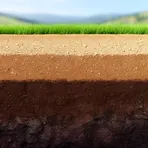
- The rocks in the cave were subjacent to the layers of soil above.
Examples
-
The connective tissue zone subjacent to the epidermis was richly vascularized.
Academic text (2001) -
The systems of taste subjacent to cultural production are reflected in judgments of taste, and like the education system, they are hierarchical.
Academic text (2002) -
Space law is therefore lex specialis that allows, for instance, states to place space objects into geostationary orbit above the subjacent territory of other states.
Academic text (2017) -
But let us not stretch this symbolism; I merely wanted to point out a subjacent wealth of meaning for the imagination to work on, a kind of subtext to the poem.
Academic text (1992) -
But bourgeois cultivations of subject formation and collective belonging in the colonies were never a secure project; as Ann Stoler argues, "subjacent histories are wedged in the folds of dominant ones."
Academic text (2016) -
In geology class, we learned that the aquifer is subjacent to the river.
-
The roots of the tree spread through the subjacent soil, providing stability.
Synonyms
 6
6.3
6
6.3

Under the ground or below the top layer of a place
 1
8.9
1
8.9
A layer under something that forms its base, like rock under ruins


 1
5.1
1
5.1
A thin part under another surface, for example under paint or soil

Existing under the surface of the earth, like pipes or caves
Antonyms

Surface Forms
Morphology
subjacent = sub + jacent
The prefix 'sub-' clearly signals 'under', but the root 'jacent' is an uncommon combining form (not a standalone English word), so learners may partially infer the meaning but not fully from familiar English vocabulary.
Etymology
Subjacent comes from sub- meaning 'under' and the root jacere meaning 'to lie down', the same root you see in adjacent. So, subjacent means 'directly below' something, or lying right under it.