
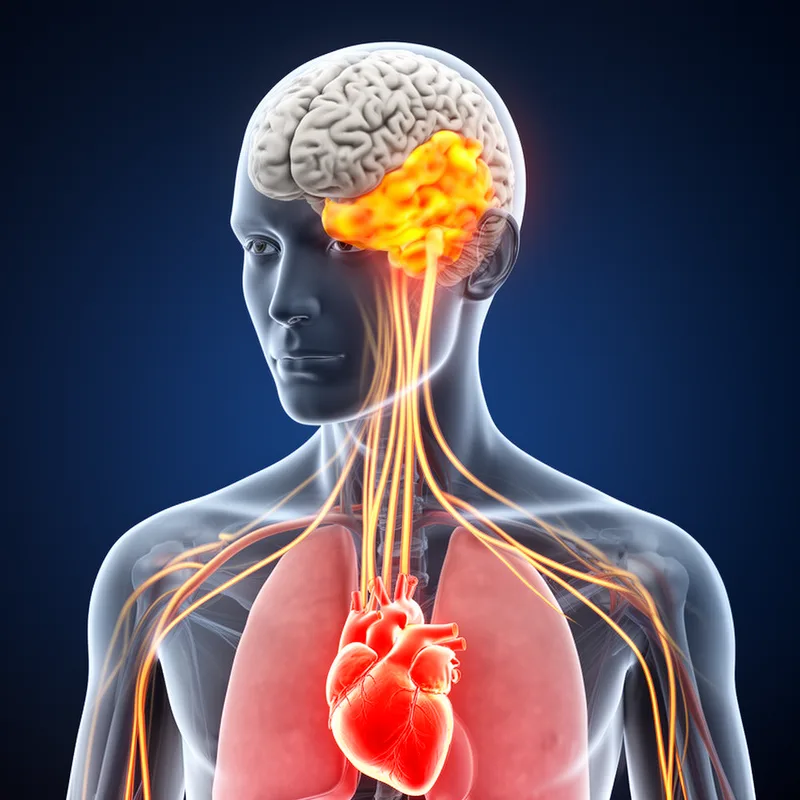
subcortex
- noun
- /sʌbˈkɔr.tɛks/
- Specialized
 :
subcorteza
:
subcorteza
- Research shows that the subcortex is essential for processing emotions and forming memories.
Examples
-
The layer underneath, the subcortex, comprises a relay system that is involved in sending messages to the processing and memory parts of the brain.
Academic text (1997) -
And it can increase the influence of the brain's subcortex, which is crucial in habit, learning and impulsivity.
-
You repeatedly have shown you can only utilize that tiny emotive-based beast brain below your neo-cortex; your subcortex speaks through.
Blog text (7) -
While each of these systems has highly specific individual pathways still to be completely ferreted out, current data suggest that they culminate in dopaminergic neurons at the level of the prefrontal cortex and oxytocin release in the medial subcortex.
Academic text (2015) -
The subcortex plays a vital role in controlling our basic functions, such as breathing and heart rate.
-
Scientists are studying the subcortex to understand its impact on our instinctual behaviors.
How Deep


Surface Forms
Morphology
Etymology
Subcortex comes from sub- 'under' and cortex 'outer layer'. So the subcortex is the part 'under' the brain's outer layer that helps control basic movement, automatic body functions, and simple emotions.