
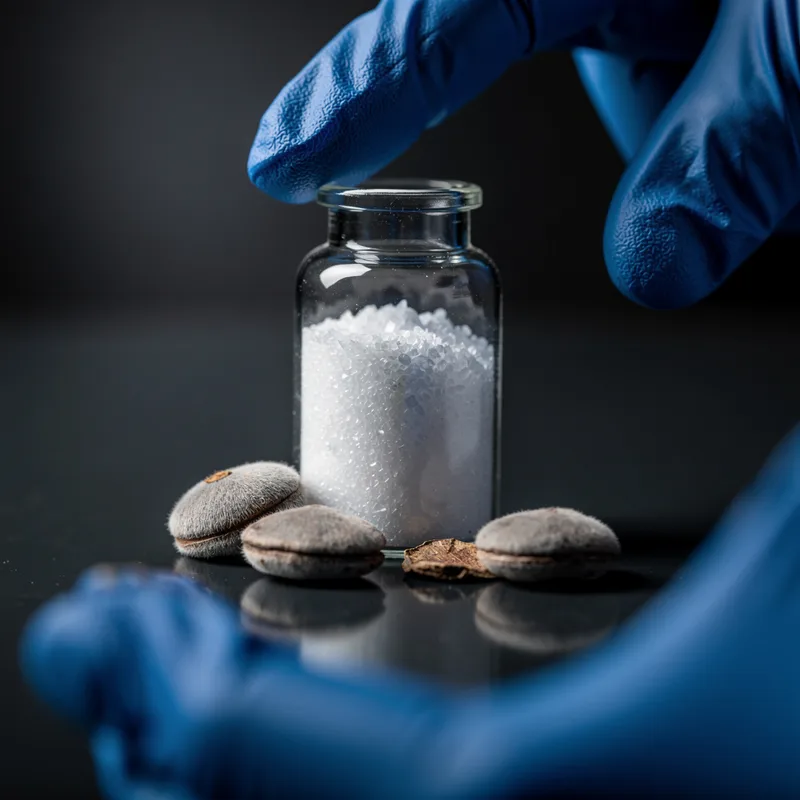
strychnine
 9
9.9

- noun
- /ˈstrɪknaɪn/
- Specialized
- The maid took the water to a pharmacist, and two weeks later he reported that it contained strychnine.
- strychnine poisoning
Loading YouTube…
Watch on YouTubeAll right, Science can prove that if I put strychnine in Grandma's tea, she will die.
- All right, Science can prove that if I put strychnine in Grandma's tea, she will die.
- When Emily dies of strychnine poisoning, Poirot is called in to use the little Gray cells Hastings the little Gray cells to solve the murder.
Examples
-
Mrs. Bates died of strychnine poison more than ten years ago.
-
The detective discovered that the victim had been poisoned with strychnine during the investigation.
-
Analysis revealed the white powder to be strychnine.
Academic text (2009) -
The next morning Madame D was found dead by strychnine poisoning.
-
Toxicology's coming back positive for strychnine.
-
They found traces of strychnine when they pumped out my stomach yesterday.
-
Intent on proving that Mrs. Stanford had died of natural causes, Jordan quickly found a physician who stated that strychnine could not have been the cause of death.
Academic text (2003) -
Recall that cocaine, heroin, strychnine, and hemlock are examples of "all-natural" products that are far from safe.
Blog text (11) -
Jordan and Hopkins issued a press release that disputed the finding of the coroner's jury, while acknowledging that traces of strychnine had indeed been discovered in the bicarbonate of soda.
Academic text (2003) -
For over a year, Sayre had treated his paralysis with electricity, had "injected strychnine into the paralyzed muscles every tenth day," and had dosed him with iron and other tonics.
Academic text (1994)
Surface Forms
Morphology
strychnine = strychn + ine
Although the suffix '-ine' signals a chemical substance, the root 'strychn-' is a botanical name unfamiliar to typical learners, so the meaning 'a poisonous alkaloid' cannot be derived from known English base words.
Etymology
Strychnine comes from the plant name Strychnos nux-vomica, whose seeds were used to make a bitter poison. The plant name comes from Greek strychnos meaning 'bitter', and the ending -ine shows it is a chemical, so the name points to a bitter, poisonous substance.