
strontium-90
 2
9.9

- noun
- /ˈstrɒn.ti.əm ˈnaɪnti/
- Specialized
- Researchers measured the levels of strontium-90 in the soil after the nuclear accident.
Examples
-
The presence of strontium-90 in the environment is concerning.
-
Scientists study strontium-90 to understand its effects on health and the environment after nuclear fallout.
-
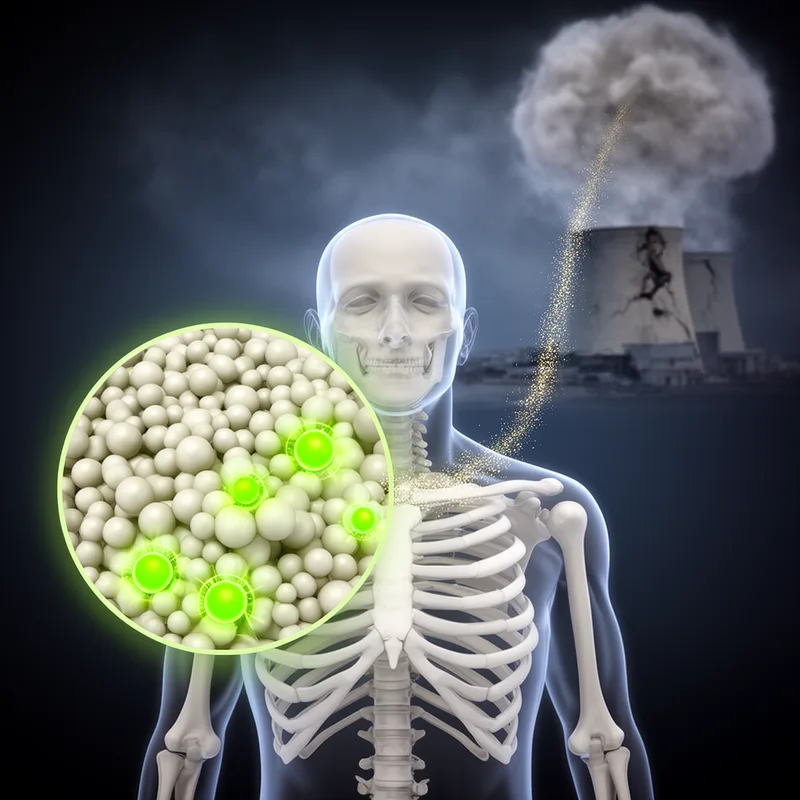
Exposure to strontium-90 is especially dangerous because the isotope can accumulate in human bones.
-
The presence of strontium-90 in milk led to widespread health concerns during nuclear testing.
-
Scientists study strontium-90 to understand its effects on health.
-
Strontium-90 is absorbed by the human body and accumulates in strontium-90 bones like calcium.
-
After the nuclear tests, strontium-90 was found in the soil and water, affecting the local food chain.
Surface Forms
Morphology
Etymology
Strontium-90 comes from the Scottish village Strontian, where the mineral that gave the element its name was found, and the -ium ending marks it as a 'metal'. The '90' shows a particular form of strontium that is radioactive and, like calcium, can build up in bones, so strontium-90 is especially dangerous.