

to strike off
 2
6.7
2
6.7

- phrasal verb
- UK
- - I'll have you struck off for this.
Loading YouTube…
Watch on YouTubeSo the only thing I can discuss is that three of the plaintiffs were struck off.
- So the only thing I can discuss is that three of the plaintiffs were struck off.
Examples
-
They'll strike me off the rolls.
-
They struck me off the register, me, Dr Ludwig Mannheim, the greatest surgeon in the world!
-
I could have you both struck off for this, you know.
-
I will have it struck off.
-
I could be struck off for this!
-
Besides, I'd be struck off.
-
A residential child care worker in Wales has been struck off after being convicted of possessing Class A drugs.
Academic text (2011) -
This pathologist has since been struck off, and a sizeable number of his post mortems were found to be unsafe.
Blog text (27) -
In 2007, the GMC began fitness to practise hearings against Wakefield, and in 2010, after being found guilty of serious professional misconduct, he was struck off the medical register, and The Lancet retracted his original paper.
Academic text (2012) -
The committee decided to strike off his name from the official list of candidates after the allegations were raised.
Synonyms
 ∞
3.1
∞
3.1
To leave out a sound or part of a word
 35
1.8
35
1.8
To draw a line through an item on a list to show it is finished
 14
2.3
14
2.3
Draw a line through a word or item to show it should be removed
 12
4.4
12
4.4
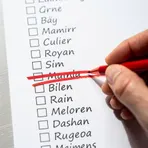
Not include someone or something in a list
 8
3.7
8
3.7
Remove a name or item from a list by drawing a line through it
Antonyms

How Removed

Surface Forms
Morphology
The meaning 'to remove from an official list' is directly derivable from combining 'strike' (to cross out/remove) with the particle 'off' (indicating removal). This verb+particle composition follows a common, compositional English pattern and is likely understandable to a B1 learner who knows both constituents.
Etymology
Strike off comes from the simple action of crossing a name out: someone would strike a line off a list to show the name was removed. So, strike off now means 'to remove someone or something from an official list or register'.