
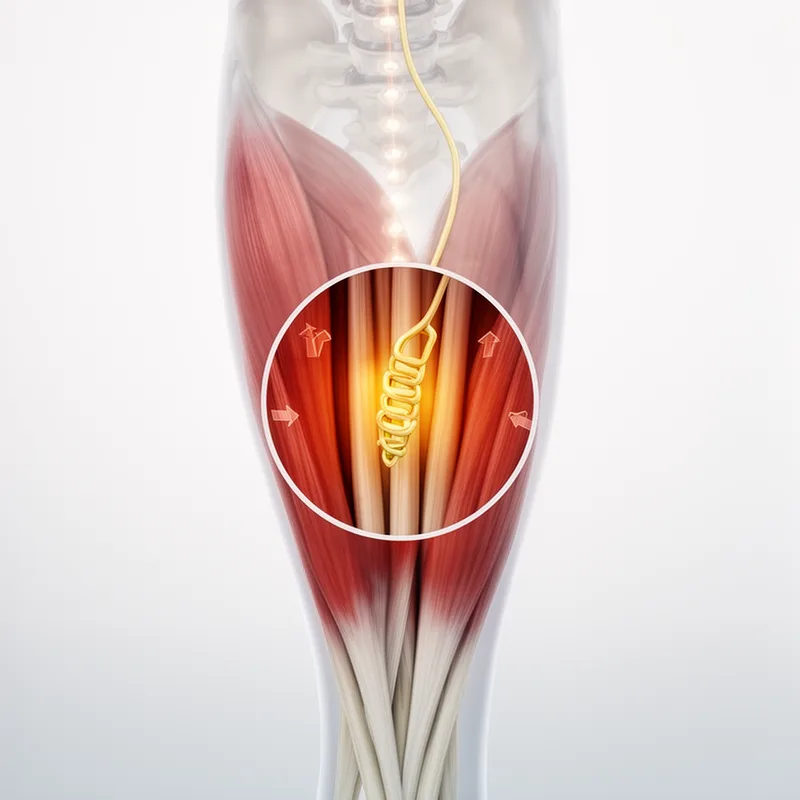
stretch receptor


 1
7.2
1
7.2
- noun
- /strɛtʃ rɪˈsɛptər/
- Specialized
- In our bodies, the stretch receptors detect fluctuations in muscle tension, helping to maintain balance and posture.
Examples
-
They come from stretch receptors in the muscle.
-
They're coming from the stretch receptors in muscles.
-
This mechanism is all reflexive; if the nerves that connect these stretch receptors to the brain are cut experimentally, the mosquito will continue to feed until she bursts because she is unable to determine when she has had enough.
Academic text (1992) -
It is likely that multiple sensors, including those from the upper airway and pulmonary stretch receptors, provide input that is communicated between the swallowing and respiratory central pattern generators.
Academic text (2011) -
The stretch receptor in the muscle senses when it is being extended and sends signals to the brain.
-
When the doctor examined the athlete, he noted that the stretch receptors responded quickly to changes in muscle length.
Surface Forms
Morphology
The meaning is directly compositional: 'stretch' (to lengthen or apply force) combined with 'receptor' (a sensor) yields a sensor that detects stretching or changes in length. Although somewhat technical, this noun-noun compound follows regular English formation and a B1 learner who knows both constituents would readily infer the MWE's meaning.
Etymology
Stretch receptor is the name for a tiny sensor in a muscle: stretch shows what it notices and receptor is a cell that picks up signals. When the muscle is made longer this sensor sends a message to the brain and nerves, so the term means 'a receptor that detects stretching'.