
streptothricin
- noun
- /strɛpˈtoʊθrɪsɪn/
- Specialized
- Researchers discovered that streptothricin can inhibit the growth of certain bacteria in laboratory tests.
Examples
-
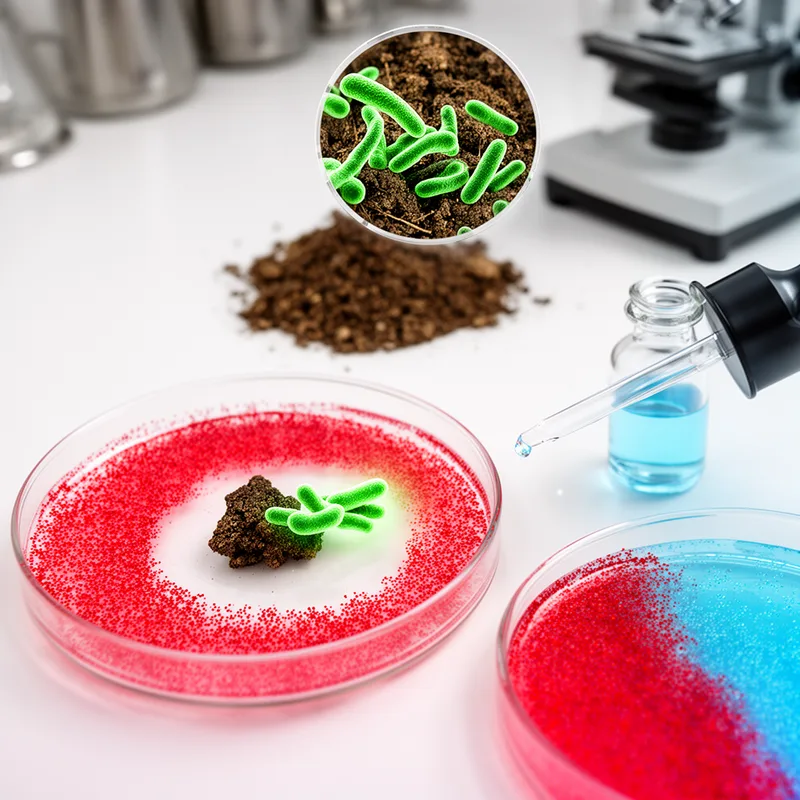
The soil sample yielded an actinomycete that produced streptothricin as a secondary metabolite.
-
Despite its promising antibacterial activity, streptothricin is rarely used due to its toxicity in humans.
-
The researcher isolated streptothricin from soil samples.
-
Dr. Smith studied the effects of streptothricin on bacterial infections.
-
In lab experiments, scientists found that streptothricin effectively kills several strains of bacteria.
-
The medical study highlighted the potential of streptothricin as an antibiotic despite its side effects.
-
Researchers at the university are exploring how streptothricin can be used to combat antibiotic-resistant bacteria.
Surface Forms
Morphology
streptothricin = Streptothrix (opaque) = streptothric + in
A technical antibiotic name derived from a bacterial genus plus the chemical suffix '-in', which is not predictable for average learners.
Etymology
Streptothricin comes from the name of the soil bacterium that makes it: strepto- means 'twisted' (as in streptococcus) and thrix means 'hair', giving the image of thread-like, twisted cells. So streptothricin is an antibiotic named after that 'twisted-hair' bacterium, which helps you remember it is a bacterial product used to fight other bacteria.

