
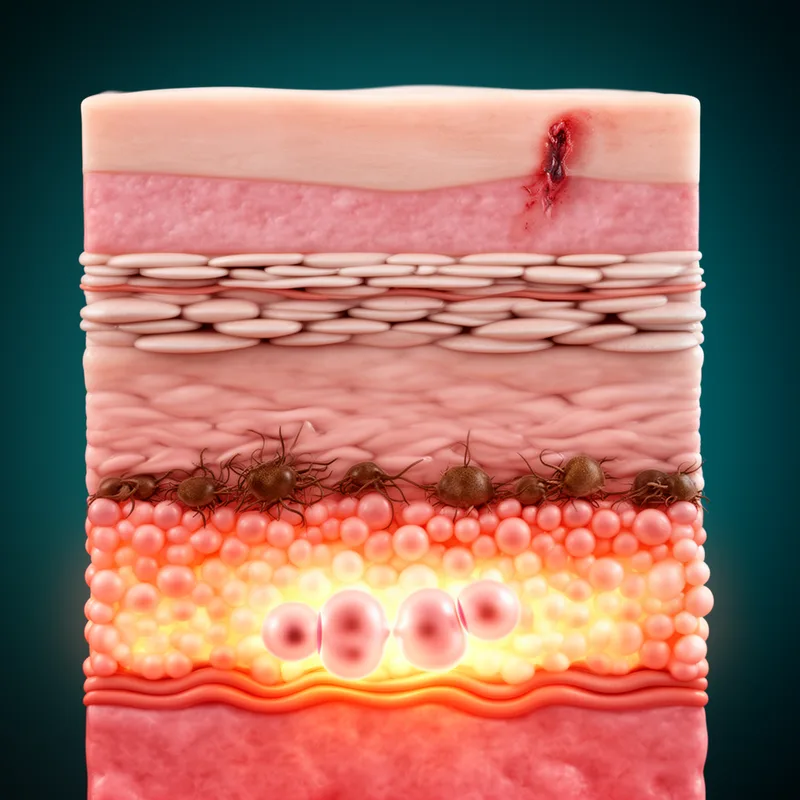
stratum germinativum
- noun
- /ˈstrætəm ˌdʒɜːrmɪˈneɪtɪvəm/
- Specialized
- Melanocytes, which give skin its color, are found in the stratum germinativum.
Examples
-
Damage to the stratum germinativum can impair the skin's ability to heal.
-
The stratum germinativum is crucial for skin regeneration.
-
The stratum germinativum continually produces new cells to replace those lost from the skin's surface.
-
Skin cells are produced in the stratum germinativum.
-
The stratum germinativum plays a crucial role in the continuous renewal of the skin by generating new cells.
-
Researchers focus on the stratum germinativum to understand skin regeneration and healing processes.
-
Damage to the stratum germinativum can hinder the skin's ability to repair itself after injury.
Synonyms

The deepest layer of the outer skin that makes new skin cells

Inner living layer of skin that makes new skin cells

The deepest layer of the outer skin contains living cells that make new skin cells
Surface Forms
Morphology
stratum + germinativum
The phrase is compositionally built from Latin-derived parts: 'stratum' = layer and 'germinativum' ≈ germinative/producing, so the overall meaning 'the layer that generates new cells' is directly derivable from the constituents. Note that 'germinativum' is a technical/Latin form uncommon in general English, but given knowledge of both constituents the sense is transparent.
Etymology
Stratum germinativum comes from Latin words: stratum meaning 'layer' and germinativum meaning 'to grow'. So it gives a simple image of a 'growing layer', the inner skin layer that makes new cells.

