

strainer vine
- noun
- Australian
- Once dried, the inside of the strainer vine fruit can be used as a natural kitchen sponge.
Examples
-
She harvested young strainer vines to prepare a traditional vegetable dish.
-
The strainer vine is commonly grown in tropical regions for its useful fibrous fruits.
-
The strainer vine produces beautiful yellow flowers.
-
Have you ever seen a strainer vine in bloom?
-
The strainer vine is known for its large yellow flowers and edible young fruits.
-
Farmers cultivate the strainer vine primarily for its mature fruit, used as a sponge.
-
In tropical gardens, the strainer vine adds vibrant color with its striking flowers.
Synonyms

A tropical climbing plant with big yellow flowers, edible young fruits, and a dry inside used as a sponge
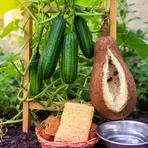
A climbing plant whose young fruits are edible and whose dried mature fruit makes a natural sponge

A climbing tropical plant whose fruit becomes a dry fibrous sponge and whose young fruit is eaten

A climbing plant with large yellow flowers and edible young fruits that dry into natural sponges

A plant fruit used as a natural bath sponge, like a loofah
Surface Forms
Morphology
strainer + vine
The compound is directly interpretable as a vine whose useful property is to 'strain' or act like a strainer/sponge: combining 'strainer' (a device or thing that strains) with 'vine' (a climbing plant) yields a clear compositional meaning. This follows a regular noun+noun naming pattern (a vine characterised by its straining/sponge-like quality), so a B1 learner who knows the constituents can infer the MWE's sense.
Etymology
Strainer vine gets its name from the plant's fruit: when the inside dries it becomes a fibrous natural strainer — like a kitchen 'sponge' that can 'strain' or filter liquids. Because it grows as a climbing vine, the name simply says it is a vine with a useful, strainer-like fruit.

