
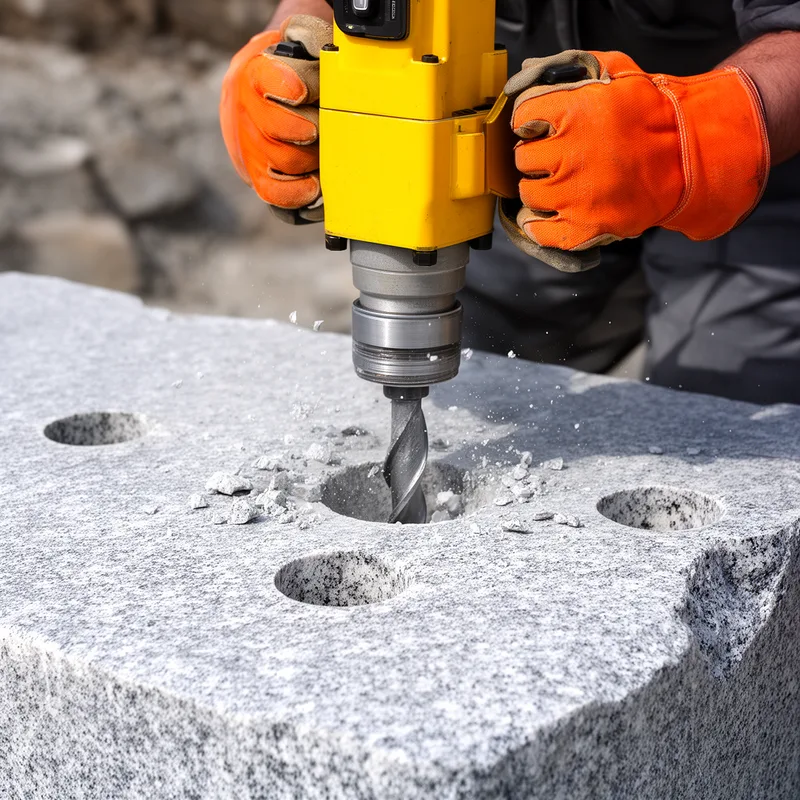
stone drill
- noun
- Specialized
- The workers used a stone drill to bore into the solid granite.
Examples
-
This modern stone drill can penetrate tough rock layers with ease.
-
Archaeologists discovered an ancient stone drill at the excavation site.
-
The stone drill worked perfectly on the granite.
-
He bought a new stone drill for the construction site.
-
Archaeologists discovered an ancient stone drill at the excavation site.
-
The workers used a stone drill to bore into the solid granite.
-
This modern stone drill can penetrate tough rock layers with ease.
Synonyms

 90
2.3
90
2.3

A tool that makes holes by turning a sharp bit
 4
2.8
4
2.8
A tool that uses electricity or a battery to make holes in hard things like wood and metal
 2
5.8
2
5.8
A machine that makes accurate vertical holes in metal or wood
 1
3.0
1
3.0
A hand-held tool that uses electricity to turn a small metal piece to make holes
 1
3.0
1
3.0
A small tool you turn by hand to make holes in wood or other materials


 1
7.7
1
7.7
A machine that drills holes in rock or the ground
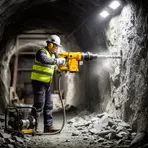
A powered tool that drills holes in rock for mining or building
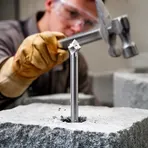
Tool with a point like a star for making holes in stone by hitting and turning it

A small tool you hold to make holes in wood or metal
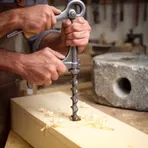
A hand tool for making round holes in wood or stone
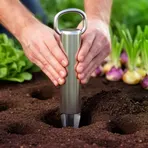
A tool used to make holes in wood or soil
How Powerful
- Specialized

- Specialized
1
3.0
188
1.0
1
3.0
Surface Forms
Morphology
The meaning 'a drill for stone' is directly and transparently derived from combining 'stone' (rock material) with 'drill' (a tool for making holes); it is a regular noun–noun compound indicating the object and its purpose/material. This composition follows common English compounding patterns and has clear cross-linguistic parallels, so a B1 learner who knows both constituents would readily infer the meaning.
Etymology
Stone drill comes from the simple image of a drill, a sharp tool, making a hole in stone, or rock. Picture a spinning tip cutting into hard rock to open a hole — that's why it means 'a tool or machine for drilling holes in rock'.