
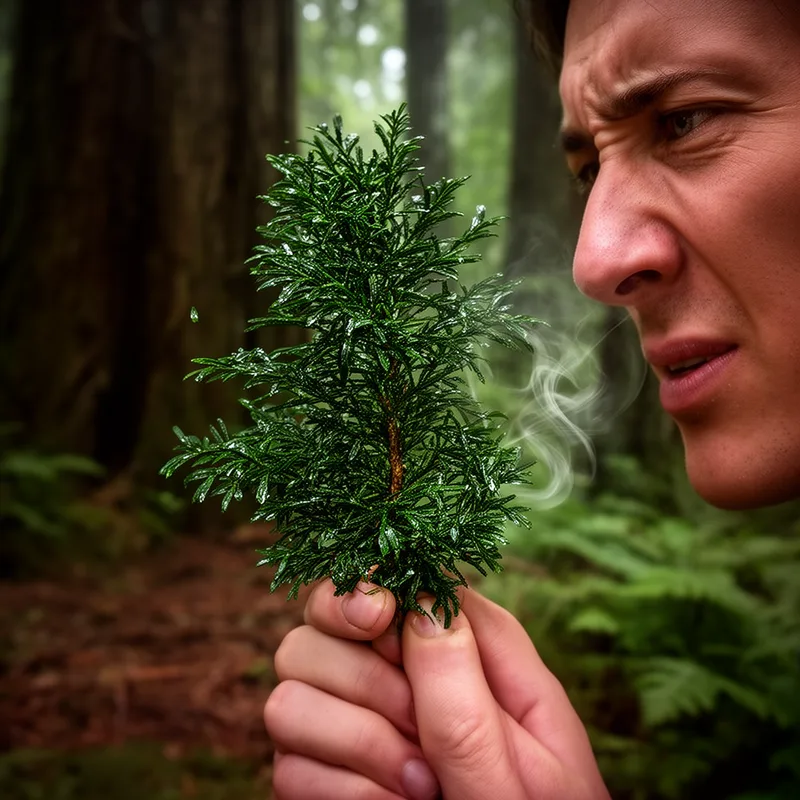
stinking cedar
- noun
- /ˈstɪŋkɪŋ ˈsiːdər/
- US
- The stinking cedar is known for its glossy green leaves that smell unpleasant when crushed.
Examples
-
Its foliage, when crushed, gave off a sharp, resinous odor, from which its common name, stinking cedar, was derived.
Academic text (1990) -
But given the tree's long history in the region, it seems unlikely that this was the most aberrant shift in climate the stinking cedar has had to face.
Academic text (1990) -
In northern Florida, the stinking cedar emits a strong odor that surprises those who encounter it.
-
To identify the stinking cedar, you can crush its leaves and note the foul smell they release.
Synonyms
A rare small evergreen tree from northern Florida with glossy leaves that smell bad when crushed
A rare small evergreen tree from northern Florida with shiny leaves that smell bad when crushed
Surface Forms
Morphology
The noun phrase is a straightforward adjective + noun composition: 'stinking' (emitting a bad smell) modifies 'cedar' (a type of tree), so a B1 learner who knows both words can infer it refers to a cedar that smells unpleasant. This compositional pattern is standard in English and cross-linguistically common, making the meaning transparent.
Etymology
Stinking cedar gets its name from the tree's real smell. When people crushed the shiny green leaves, a strong, bad smell came out. So stinking tells about the smell and cedar names the tree, meaning the name is 'a cedar that smells bad'.

