
stigmata
 9
9.9
9
9.9

- noun
- /ˈstɪɡmətə/
- Literature
- Many believe that the appearance of stigmata indicates that a person is chosen by God.
- physical stigmata
Loading YouTube…
Watch on YouTubeIn fact, you know people know about Saint Francis's stigmata.
- In fact, you know people know about Saint Francis's stigmata.
- For this mole to be a credible stigmata, you had to imagine people worshipping at Christ, dangling from the cross by one arm, shoulder pulled from socket.
Examples
-
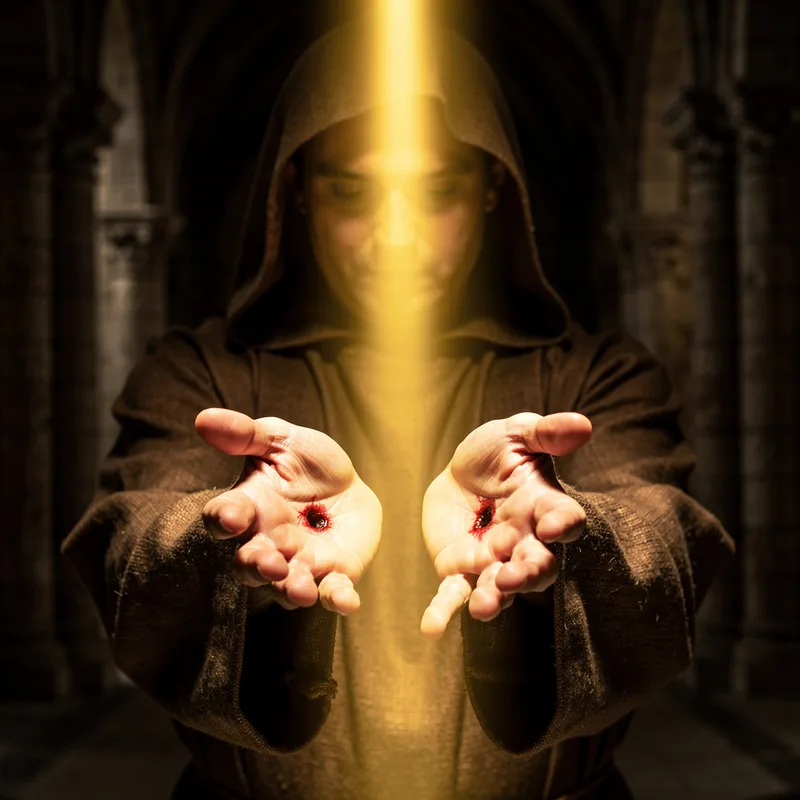
According to Christian tradition, the stigmata are marks that resemble the wounds of Christ's crucifixion.
-
Padre Pio received the stigmata on September 20, 1918, after administering a two-hour Eucharist.
Fiction book (2002) -
- How many have received the stigmata ?
-
Did you check for stigmata?
-
Stigmata are a sign, a mark indicating one is touched by God.
-
The climax of Francis's hagiography occurs in his reception of the stigmata in the last years of his life.
Academic text (2008) -
In traditional Christian imagery, stigmata are signs of the repetition of Christ's suffering, holy marks of the imitatio Christi.
Academic text (1991) -
Several developed stigmata—actual bruises or welts—as if in response to these invisible assaults.
Academic text (1992) -
Saint Francis of Assisi is famous for having received the stigmata, making him a symbol of holiness.
Surface Forms
Morphology
Etymology
Stigmata comes from the Greek word stigma, meaning 'a mark' or 'a brand made by a sharp tool'. That's why stigmata means the marks or wounds people say appear on saints' bodies and copy the wounds of Christ.