
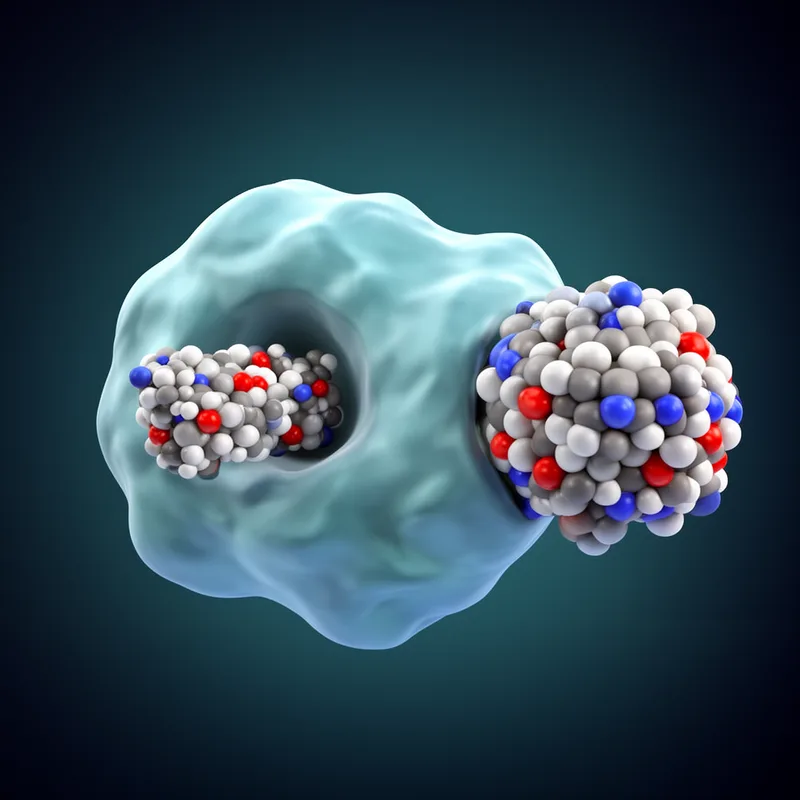
steric


 1
8.9
1
8.9
- adjective
- /ˈstɛrɪk/
- Specialized
- Also, previous arrays made in a similar manner suffer from steric effects that tend to favor certain R groups, so there may not be equal amounts of all 4 billion compounds, maybe more like a few million, which is still a lot. But when we looked at smaller arrays, each step had some chemicals that reacted well and some that did not work well, so not all steps worked well, much like peptide synthesis.
- steric hindrance
Examples
-
If the change makes your molecule fit (removes steric hindrance or allows it to make critical H-bonds, etc.),
Blog text (6) -
Roger: Meehl et al. only estimate sea level rise due to thermal expansion (steric sea level rise), and don't attempt to estimate the sea-level rise due to melting ice.
Blog text (33) -
Now, steric effects of the substituents are also taken into account in the two-model system calculations.
Academic text (2001) -
In addition, this ring neatly fits between the steric gate residues Phe80 and Phe141.
Academic text (2013) -
I have even compared RSS and UAH to steric sea level change and seasonal CO2 fluctuations.
Blog text (34) -
Theoretical work has shown that the transition arises because of a steric interaction between vortices with slightly noncircular (squarish) cross sections that are due to the underlying crystalline symmetry.
Academic text (1998) -
In organic chemistry, understanding steric effects helps predict how different molecules will react with one another.
-
Chemists often analyze steric hindrance to determine the speed of chemical reactions involving large molecules.
-
The steric arrangement of atoms in this compound significantly influences its reactivity in various chemical processes.
Synonyms
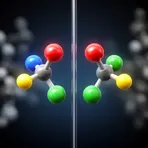
About how atoms sit in three dimensions inside a molecule
How Large

Surface Forms
Morphology
steric = stereochemistry (opaque) = stere + ic
Formed from the combining form 'stere-' (not a common standalone English word) plus the adjectival suffix '-ic'; the combining form is technical and not obvious to average learners.
Etymology
Steric comes from the Greek root stereos, meaning 'solid' or 'three-dimensional', and you can see the same root in the word stereo. Think of a solid object that takes up space and gets in the way, so steric describes how the shape and space of parts of a molecule can block or change chemical reactions.