
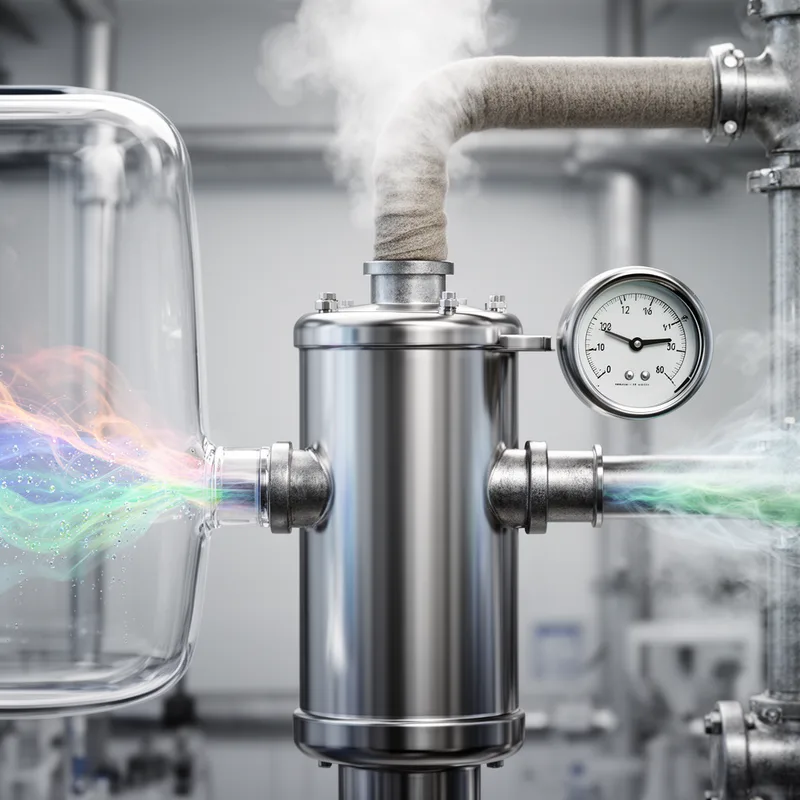
steam ejector
- noun
- /stiːm ɪˈdʒɛktər/
- Specialized
- Many refineries rely on the steam ejector for reliable vacuum generation.
Examples
-
The laboratory uses a steam ejector to maintain a high vacuum in their equipment.
-
The steam ejector efficiently moves fluids by using steam under pressure.
-
A malfunction in the steam ejector caused a drop in system efficiency.
-
The steam ejector operates efficiently in the system.
-
Did you check the steam ejector for leaks?
-
Many refineries rely on a steam ejector to create vacuums for various processes.
-
In the lab, a steam ejector is essential for achieving the required vacuum levels.
Synonyms

 4
7.0
4
7.0

A device that forces out air, liquid, or other material

A machine that uses steam to remove air and make a vacuum

A pump that uses a fast jet of water or steam to pull in and move another liquid
Surface Forms
Morphology
The compound is compositionally built from 'steam' (vapor) + 'ejector' (a device that ejects), so its meaning as a device that uses steam to eject or move fluids is directly derivable from the constituents. This follows a common noun–noun compounding pattern found across languages and would be transparent to a learner who knows both words, even if the concept is technical.
Etymology
Steam ejector is a machine that uses a strong jet of steam to throw out air and carry away liquids, and the word ejector simply means 'something that throws out'. So the name fits its use 'to create a vacuum' or 'move fluids'.