
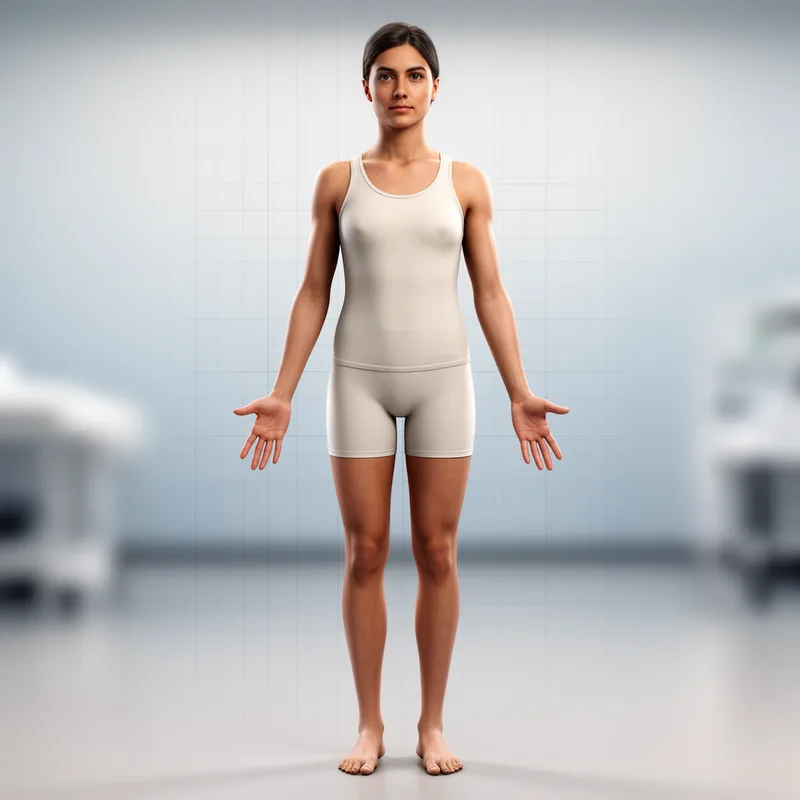
standard anatomical position
- noun
- /ˈstændərd əˈnætɪkəl pəˈzɪʃən/
- Specialized
- In the standard anatomical position, the palms of the hands face forward and the feet point straight ahead.
Examples
-
Doctors use the standard anatomical position to describe the locations of injuries or organs.
-
Before beginning the dissection, students should orient the specimen in the standard anatomical position.
-
The standard anatomical position is crucial for understanding human anatomy.
-
In a standard anatomical position, the body faces forward.
-
Doctors use the standard anatomical position to describe the locations of injuries or organs.
-
Before beginning the dissection, students should orient the specimen in the standard anatomical position.
-
In the standard anatomical position, the palms of the hands face forward and the feet point straight ahead.
How Displaced
- Specialized

- Specialized
- Specialized
- Specialized
 1
9.9
1
9.9

- Specialized
Surface Forms
Morphology
standard + anatomical + position
The meaning is directly built from the constituents: 'standard' (accepted reference), 'anatomical' (relating to body structure) and 'position' (physical arrangement), so it denotes the usual reference posture used in anatomy. Although it's a technical term, the composition follows standard, cross-linguistically common patterns and a B1 learner who knows the component words can infer the meaning.
Etymology
The term standard anatomical position comes from the need to pick one clear pose as a 'reference' for the body: a person standing straight, facing forward, with the arms at the sides, palms facing forward and the feet pointing ahead. That's why doctors and students use it to describe where body parts or injuries are.