
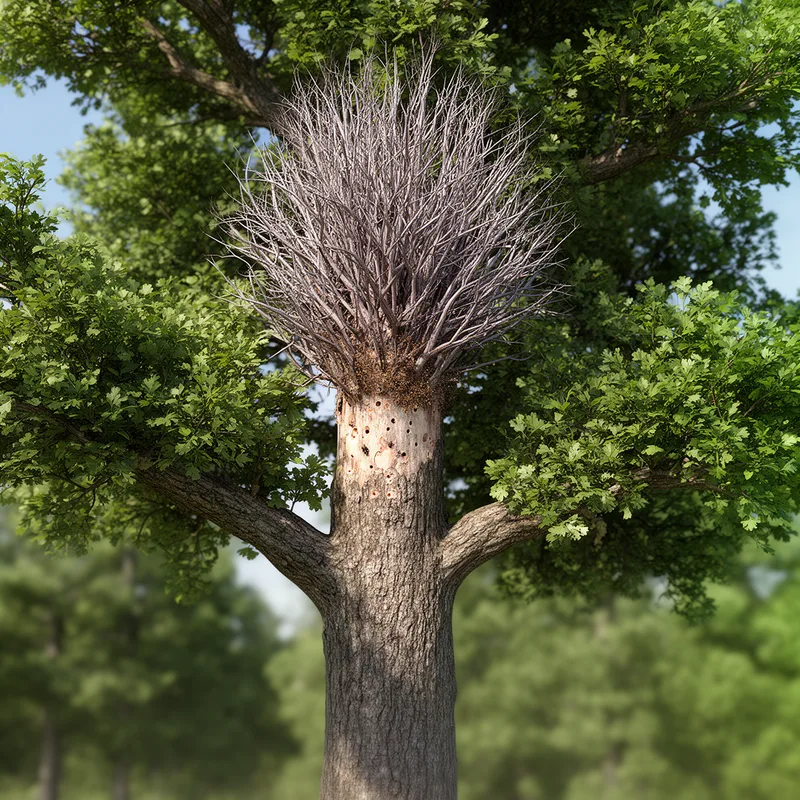
staghead
- noun
- Specialized
- The ancient oak developed a pronounced staghead due to repeated insect attacks.
Examples
-
A staghead can severely weaken the upper branches of a tree and reduce its lifespan.
-
Foresters monitor trees for signs of staghead as an indicator of environmental stress.
-
The staghead on that oak tree is quite noticeable.
-
Many stagheads can be found in the forest.
-
Foresters monitor trees for signs of staghead as an indicator of environmental stress.
-
The ancient oak developed a pronounced staghead due to repeated insect attacks.
-
A staghead can severely weaken the upper branches of a tree and reduce its lifespan.
Synonyms

A thick cluster of small branches that grows from one spot on a tree, often after fungus or insect damage
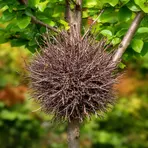
A dense cluster of small branches on a tree caused by disease or insects

A dense cluster of twigs growing from one point on a tree
Surface Forms
Morphology
Etymology
Staghead probably comes from the two simple words stag ('male deer') and head, because the clump of twisted small branches can look like a stag's antlers or head. So a staghead is a strange tuft of small branches on a tree, usually caused by disease, insects, or damage.

