
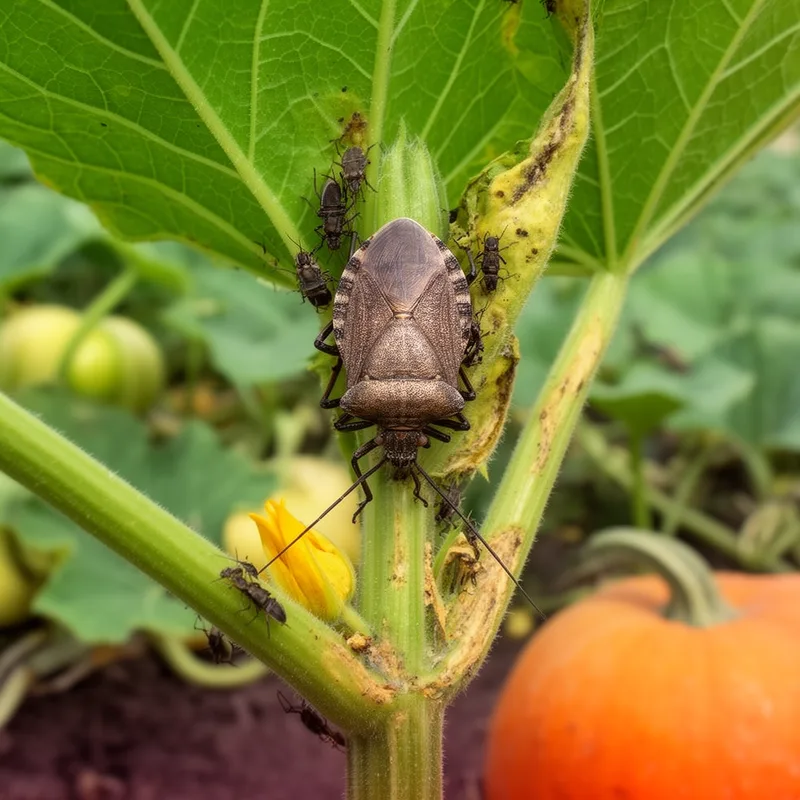
squash bug
- noun
- /skwɑʃ bʌg/
- US
- Hall periodically sprays his 450-acre melon crop with an insecticide that kills squash bugs, which he suspects infect the plants as they feed.
- beetles and squash bugs
- leafhoppers and squash bugs
- squash bugs or borers
Loading YouTube…
Watch on YouTubeIf you suffer from squash bugs and squash fine borer, plant it in the fall.
- If you suffer from squash bugs and squash fine borer, plant it in the fall.
Examples
-
In addition to leafhoppers and squash bugs, they also looked at aphids, which tap into the plant's sweet, rich sap.
Academic text (1997) -
But we don't have any squash bugs yet, which is amazing.
-
In May, the researchers used their new test to sample hundreds of leafhoppers, squash bugs, and other insects.
Academic text (1997) -
If you suffer from squash bugs and squash fine borer, plant it in the fall.
-
This also applies to things like squash bugs with squash fine bores.
-
We have tons of earwigs, tons of squash bugs and mosquitoes really, really bad.
-
You can prevent damage to your garden by eliminating any squash bugs you find on your plants.
-
Gardeners often struggle with squash bugs that sap the nutrients from their squash plants.
-
To protect your crops, regularly check for squash bugs hiding under the leaves.
Synonyms

A large dark bug that eats plant juice from squash and damages crops

A group of bugs that eat and damage squash and pumpkin plants
Surface Forms
Morphology
The noun is a straightforward compound of 'squash' (the plant) + 'bug' (an insect), so its referent—an insect associated with or feeding on squash—is directly inferable from the parts. This compounding pattern is common and cross-linguistically transparent, so a B1 learner who knows both constituents would be expected to understand the meaning.
Etymology
Squash bug The name squash bug comes from the insect's habit of feeding on squash plants: the bug uses its mouth to suck the plant's juice, so leaves and fruit often go brown and die. So the name now means a pest that eats and can destroy squash crops.

