

squama
- noun
- /ˈskweɪmə/
- Specialized
- The reptile's skin is covered in hard squama that protect it from predators.
Examples
-
The tumor also involved the squama of the temporal bone, the zygomatic process, and the greater wing of the sphenoid bone.
Academic text (2005) -
A 1979 review of more than 50 extracanalicular osteomas showed that the mastoid was the most commonly reported temporal bone site, followed by the squama.
Academic text (2008) -
Drilling superficial lesions of the mastoid and squama is a simple procedure.
Academic text (2008) -
Superficial lesions of the mastoid and squama were drilled until normal mastoid air cells were reached.
Academic text (2008) -
The mastoid area is the most common site, although these neoplasms have been reported in the squama, middle ear structures, promontory, internal auditory canal, and styloid process.
Academic text (2008) -
In a 1979 review of the literature by Denia et al., 41 (77%) of 53 reported cases of temporal bone osteoma were found in the mastoid region, whereas only 4 cases occurred in the squama.
Academic text (2008) -
The fish has colorful squama that shimmer in the sunlight, making it beautiful to see.
-
Many birds have squama on their feet that help them grip branches tightly.
Synonyms
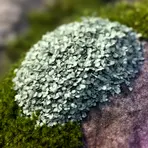
A tiny flat part on the surface of plants like moss or lichen
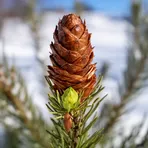
A small leaf that covers and protects a bud on plants like pine trees
Surface Forms
Etymology
Squama comes from the Latin word squama, which means 'scale', like the hard plates on a fish or a snake. So a squama is a scale or scale-like part that protects an animal or a plant.

