

spring equinox
 1
4.3
1
4.3

- noun
- /sprɪŋ ˈɛkwɪnɒks/
- As the spring equinox approaches, the days gradually become longer and warmer.
Loading YouTube…
Watch on YouTubeIt depends on the what's called the first full moon after the spring equinox.
- It depends on the what's called the first full moon after the spring equinox.
- Now, three months after that, at the spring, the spring equinox, it'll be like this again.
Examples
-
Many cultures celebrate the arrival of spring during the spring equinox, which usually occurs around March 21.
-
It is likely that choosing "the first day of Farvardin," the spring equinox, for this new practice was probably deliberate.
Academic text (2007) -
However, they did not celebrate the resurrection of the Sun until the spring equinox, or Easter.
-
Several years ago at the spring equinox, Victoria's coven put on a large public circle.
Fiction book (1997) -
By the spring equinox, the diffuse quality would disappear and brightness would take its place.
Fiction book (1995) -
The zodiac begins with Aries and the spring equinox, which used to correspond with March 24 as New Year's Day in the Old Style calendars.
Blog text (22) -
This year they didn't even wait for spring—the first robin showed up on 13 March, more than a week before the spring equinox.
Academic text (2004) -
This is because at the spring equinox, the Sun officially overpowers the evil darkness, as daytime thereafter becomes longer in duration than the night, and the revitalizing conditions of spring emerge.
-
The spring equinox marks the moment when day and night are nearly equal in length.
Synonyms
 1
7.3
1
7.3
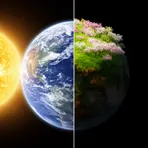
The March day when day and night are nearly equal and spring begins in the north
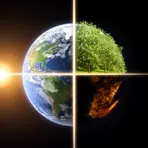
The time around March 20 when day and night are nearly equal and spring begins in the Northern Hemisphere
Surface Forms
Morphology
The meaning is directly compositional: 'equinox' denotes the event of equal day and night, and 'spring' simply specifies which occurrence. This season+event noun combination follows a regular, cross-linguistic pattern (e.g. Spanish 'equinoccio de primavera'), so a B1 learner who knows both words would readily understand it.
Etymology
Spring equinox names the day in spring around March 21 when the sun is in a position that makes day and night almost the same length, like a scale with both sides 'balanced'. That's why the spring equinox is used to mark the start of the season and the coming of longer days in the north.