
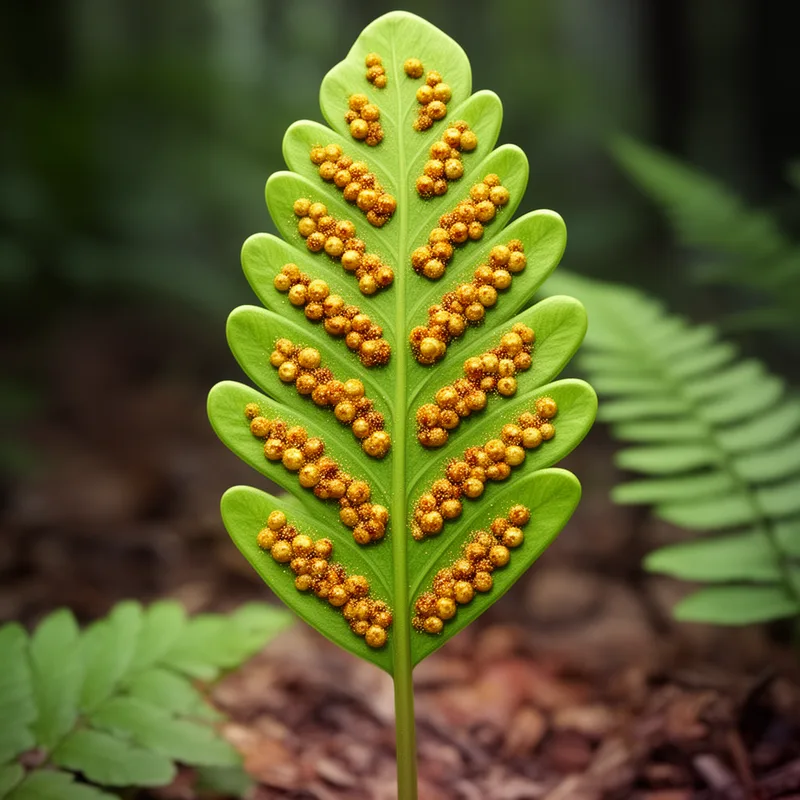
sporophyll
- noun
- /ˈspɔrəˌfɪl/
- Specialized
- Some club mosses produce cones composed of closely packed sporophylls.
Examples
-
The arrangement of sporophylls can help botanists identify different plant species.
-
In ferns, the sporophyll is often distinct from the sterile leaves.
-
A sporophyll is essential for the reproduction of ferns.
-
The sporophylls of the plant are often green and leaf-like.
-
In ferns, the sporophyll is the part of the plant where reproductive spores are produced.
-
The sporophyll can often be distinguished by its unique arrangement of sporangia on the leaf surface.
-
Studying the sporophyll helps scientists understand how different plants reproduce through spores.
Synonyms

A part of a plant or fungus that makes tiny spores that grow into new living things
How Specialized
- Specialized

- Specialized
- Specialized
 178
1.0
178
1.0

Surface Forms
Morphology
sporophyll = phyll (semi-transparent) = sporo + phyll
For learners who know the scientific combining forms, 'sporo-' plus 'phyll' suggests a spore-bearing leaf, but the term is specialized and not built from everyday standalone words.
Etymology
Sporophyll combines spore ('spore') and phyll ('leaf'), so it literally means a 'leaf that carries spores'. That's why a sporophyll is a leaf or leaf-like part of a plant that bears the spore-making parts.