

to speak for
 133
3.4
133
3.4

- phrasal verb
- /spiːk fɔːr/
 :
hablar en nombre de
:
hablar en nombre de
- As their spokesperson, I can speak for the entire team when I say we support this decision.
- speak for the majority
- speak for others
- speak for the faculty
Well, I think I speak for millions of people.
- Well, I think I speak for millions of people.
- And I can't speak for them, but for me, it doesn't work.
- So I can't speak for everyone, but that's why I did it.
- Thank you, Marcie Hamilton speaking for the negative on the resolution.
- She said, I don't speak for the Latino community.
- And yes, and he, he, I will speak for him because he's not here.
- He's going to speak for Jeanette at the end.
- Does he does he take religious authority as sort of speaking for God or or not?
- I I I'll speak for me rather than for Nietzsche.
- I, I, I, I can't speak for other countries.
- But you know, we saw at least, OK, I'll speak for single family, right?
- He doesn't feel, I don't want to speak for the man, but I did.
- They won't really speak for you if you don't have them with the right name.
- I can't speak for my bunch.
Examples
-
I am speaking for my friends who choose not to speak.
-
How she felt about that man does not speak for all women.
-
So let me not speak for them, but speak for what I think they might.
-
I mean, when I speak for you guys, it's from the heart.
-
Well, I think I speak for millions of people.
-
I'm here today to speak for all people of mixed race in America.
-
I believe that I speak for my fellow female students here at Henenlotter High.
-
Be proud because they'll never trust you, sir, because we speak for the average American.
Fiction book (1995) -
He could speak for us where it counts.
-
The administrator could honestly argue that these vocal protestors do not speak for the silent majority.
Academic text (1993)
Synonyms
 835
2.7
835
2.7
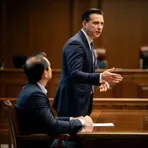
Speak or act officially for someone, for example a lawyer
Antonyms

How Representative

Surface Forms
Morphology
The meaning 'to express the views of another' is directly and compositionally derived from 'speak' (to utter words) + 'for' (on behalf of), so the overall sense follows a straightforward verb + preposition pattern. This construction is cross-linguistically common (e.g. Spanish 'hablar por', French 'parler pour' / 'parler au nom de') and would be predictable to a B1 learner who knows both constituent meanings.
Etymology
Speak for comes from the image of one person using their voice on behalf of others, with speak meaning 'use your voice' and for meaning 'on behalf of'. So, it means 'to say what someone else thinks'.