

spirits of wine
- noun
- Archaic
- The laboratory technician carefully poured spirits of wine into the beaker for the experiment.
Examples
-
Early chemists often used spirits of wine as a solvent in their research.
-
To sterilize the instruments, the doctor used pure spirits of wine.
-
The lab uses spirits of wine for various experiments.
-
Can you provide the spirits of wine for the test?
-
In the chemistry lab, the students learned to use spirits of wine as a powerful solvent for their experiments.
-
For the preparation of the solution, the researcher added spirits of wine to ensure complete purity.
-
To clean the glassware thoroughly, the technician used spirits of wine before the experiment started.
Synonyms

 66
4.1
66
4.1

A clear flammable liquid that is the alcohol in drinks and used as a fuel and to dissolve things
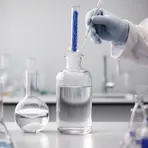
Pure alcohol with almost no water used in labs

A clear, flammable liquid used to make drinks like beer and wine and for cleaning and fuel

Very strong clear alcohol used to make drinks like gin or liqueurs
How Strong

Surface Forms
Morphology
The meaning 'rectified ethyl alcohol' is directly derivable from the constituents: 'spirits' (distilled strong drink) + 'of' (from) + 'wine' (fermented grape beverage), indicating alcohol obtained from wine. This source-denoting noun-of-noun construction is compositional and cross-linguistically common, so a B1 learner who knows the parts can infer the MWE meaning (even if the phrase is somewhat formal/old-fashioned).
Etymology
Spirits of wine comes from old distillers who heated wine and caught the clear vapour, the 'spirit' that rose from it. People thought this rising liquid was the true, strong part of the wine, so they called it spirits, and that's why today spirits of wine means 'very strong alcohol' used in labs and hospitals.