

spider angioma
- noun
- /ˈspaɪdər ˌæn.dʒiˈoʊ.mə/
- Specialized
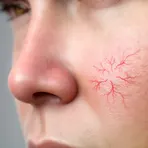
- A spider angioma often fades when pressed in the center, then refills from the radiating vessels.
Examples
-
Liver disease can cause multiple spider angiomas to appear on the skin.
-
The dermatologist identified a spider angioma on the patient’s cheek during the examination.
-
She has a spider angioma on her arm.
-
Many people develop spider angiomas as they age.
-
The doctor explained that a spider angioma is characterized by a central red spot with radiating blood vessels.
-
After the examination, the dermatologist confirmed the presence of a spider angioma on the patient's back.
-
During her routine check-up, the nurse noticed several spider angiomas on the elderly man's arms.
Synonyms

A small red spot on the skin with short red lines spreading like a spider

A small red spot on the skin with thin red lines spreading out from the middle
A small widened blood vessel near the skin that looks like a thin red line

A non-cancer growth made of many small blood or lymph vessels
How Visible


Surface Forms
Morphology
The term is compositionally descriptive: 'angioma' is a blood-vessel tumor and 'spider' describes the radial, spider‑like appearance, so the overall meaning (a vascular lesion with a central spot and radiating capillaries) is directly inferable from the constituents. This type of noun‑noun descriptive formation is transparent and cross‑linguistically common, so a B1 learner who knows both words would likely understand the MWE.
Etymology
The noun spider angioma comes from how the skin mark looks: a small red center with thin blood lines spreading out like a spider's legs, and angioma is a medical word for a small blood-vessel spot. So the name means 'a small blood vessel on the skin that looks like a spider', which helps doctors describe this mark.