
sphingomyelin


 1
9.9
- noun
- /sfɪŋɡoʊˈmaɪlɪn/
- Specialized
- Researchers study sphingomyelins to understand their role in neurological diseases.
Examples
-
The researchers measured the amount of sphingomyelin in different regions of the brain.
-
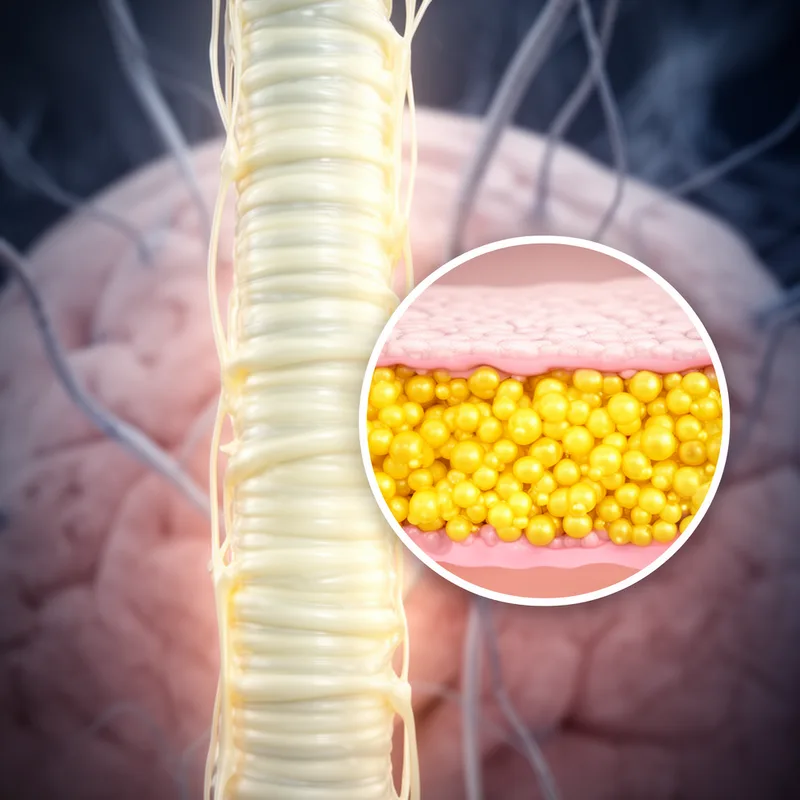
Myelin sheaths are rich in sphingomyelin, which helps insulate nerve fibers.
-
A deficiency in sphingomyelin can lead to certain neurological disorders.
-
The sphingomyelin content in the brain is crucial for nerve function.
-
Sphingomyelin is a crucial component of the sphingomyelin that insulates nerve cells.
-
Researchers discovered that sphingomyelin levels influence cell signaling in the brain.
-
The structure of sphingomyelin consists of a sphingosine backbone linked to a fatty acid and a phosphate group.
Surface Forms
Morphology
Etymology
Sphingomyelin starts with sphingo-, named after the 'sphinx' because the molecule once puzzled scientists, and ends with myelin, the fatty covering of nerve cells. So, sphingomyelin is an important fat found in the membranes and sheaths of nerve cells.