
sphenoethmoid
- noun
- /ˌsfɛnəʊˈɛθmɔɪd/
- Specialized
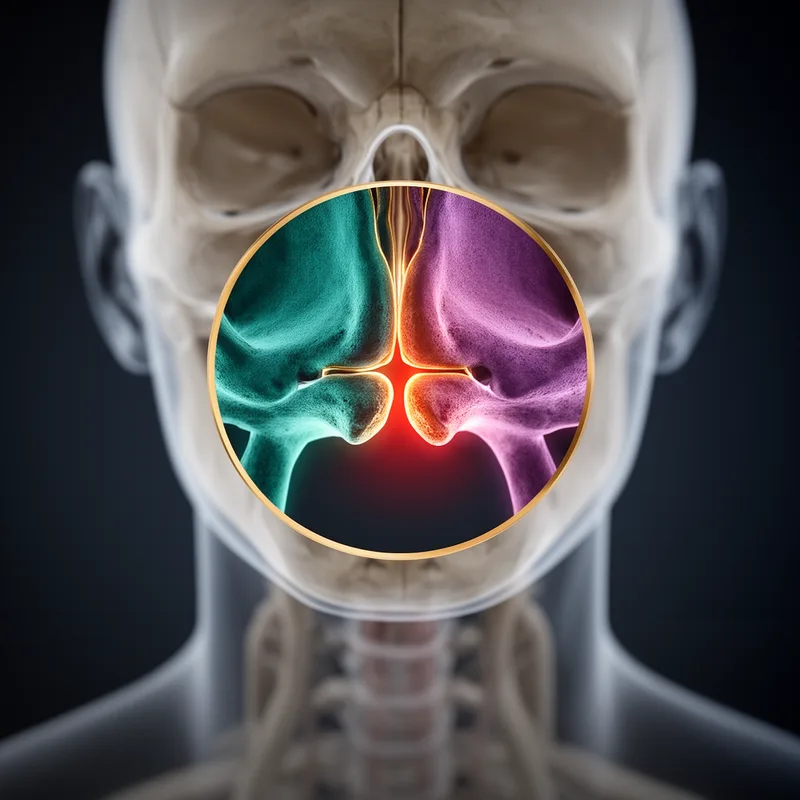
- Collectively, these structures form what is known as the sphenoethmoid recess, which serves as a common drainage pathway for the posterior ethmoid and sphenoid sinuses.
- sphenoethmoid recess
Examples
-
The nasal mass was seen occupying the sphenoethmoid recess; it had arisen from the nasal septum on the posterior part of the vomer (Figure 1).
Academic text (2009) -
Swab specimens of the middle meatus and sphenoethmoid recess were aseptically obtained endoscopically and cultured for aerobes.
Academic text (2004) -
Instead, it was attached to the cribriform plate and the sphenoethmoid recess by a stalk.
Academic text (2008) -
The sphenoethmoid recess was extremely narrow, and the ostium of the sphenoid sinus was barely seen.
Academic text (2009) -
The entire sphenoethmoid roof was carefully cleared of mucosa and inspected for a bony defect.
Academic text (2008) -
Swab specimens of the middle meatus and the sphenoethmoid recess were collected under endoscopic vision without touching the nasal vestibule and mucosa.
Academic text (2004) -
The surgeon examined the tumors located in the sphenoethmoid region of the skull.
-
After the procedure, the doctor noted inflammation in the sphenoethmoid junction.
-
The doctor explained how infections can spread from the sinuses to the sphenoethmoid area.
Surface Forms
Morphology
Etymology
Sphenoethmoid comes from the parts spheno- meaning 'wedge' and ethmoid meaning 'sieve', because the sphenoid bone is wedge-shaped and the ethmoid bone has many small holes. So the sphenoethmoid is the place where those two bones meet in the skull.

