
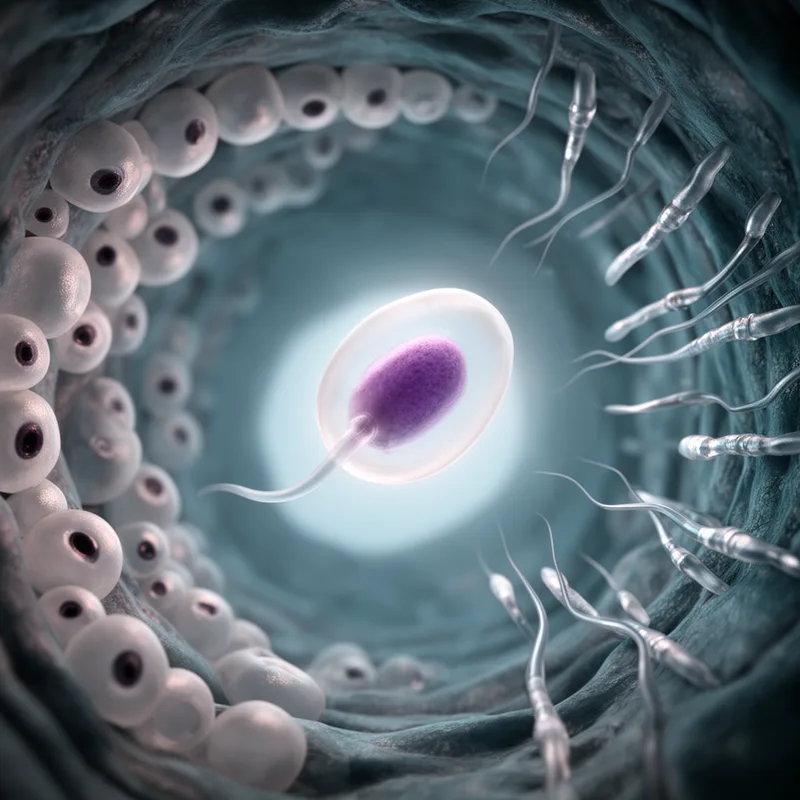
spermatid
- noun
- /ˈspɜr.mə.tɪd/
- Specialized
- After meiosis, each spermatid is formed and begins the journey toward becoming a mature spermatozoon.
- spermatids and spermatozoa
Examples
-
No postmeiotic cells (round haploid spermatids, elongating spermatids, or mature spermatozoa) were present in the samples from these patients.
Academic text (2003) -
No postmeiotic cells (round haploid spermatids, elongating spermatids, or mature spermatozoa) were present in the samples from these patients.
Academic text (2003) -
In contrast, abnormal structures were detected in the hypertrophic testes, in which numerous spermatogonium-like cells were filled, whereas only a few spermatids and spermatozoa were seen (Figure 1, G and H).
Academic text (2017) -
During the process of spermatogenesis, a spermatid matures into a spermatozoon capable of fertilization.
-
The spermatid develops in the testes and eventually transforms into a mobile sperm cell.
How Mature
- Specialized


 1
9.6
1
9.6

- Specialized
- Specialized
- Specialized
Surface Forms
Morphology
Etymology
The word spermatid comes from the Greek root sperma, which means 'seed' and is the same root as sperm, plus the ending -id meaning 'young' or 'like'. So a spermatid is a 'young seed' cell that will develop into a sperm.