
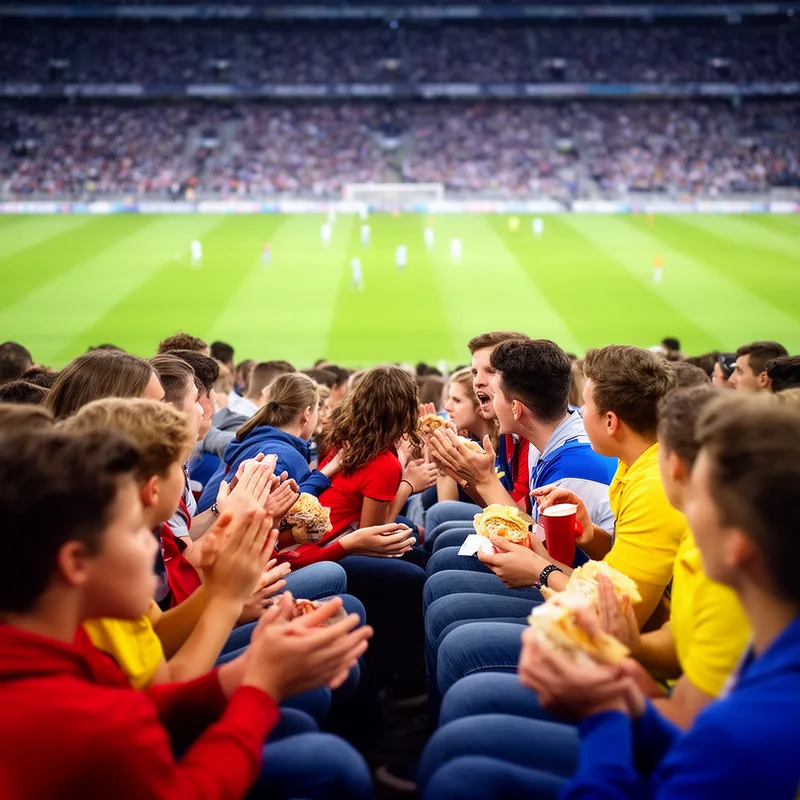
spectatorship


 1
6.7
- noun
- /spɛkˈteɪʃərˌʃɪp/
- Many people enjoy the spectatorship of live concerts, where they can experience the music in person.
- impartial spectatorship
- classical spectatorship
- sport spectatorship
Examples
-
The grand total of American expenditures for sport spectatorship approaches $8 billion annually.
Academic text (1990) -
Boxing was another activity that involved more spectatorship than participation.
Academic text (1994) -
The participation of citizens was reduced to pure spectatorship.
Academic text (2015) -
Not just a performance, then, it potentially dramatizes the ethics of spectatorship as well.
Academic text (2017) -
Mass audiences do not engage in passive spectatorship or merely absorb messages as intended by their senders.
Academic text (1996) -
Through these layers of spectatorship, the work constructs multiple culturally-inflected positions in relation to enacted events.
Academic text (1998) -
There are cameras, there are guards, there are viewing platforms, and it echoes, in some ways, the kind of close spectatorship of bodies that also happens in theatres.
-
The spectatorship at the championship game was electric, with fans cheering for their favorite teams.
-
The documentary explored the evolution of spectatorship in sports and how it has changed over the decades.
Synonyms
 ∞
1.1
People who sit together to watch a performance or listen to a speech
Antonyms

How Engaged

Surface Forms
Morphology
Etymology
The word spectatorship comes from spectator, which comes from the old Latin spectare meaning 'to look'. So, like a spectacle (a show you watch), spectatorship is the activity or experience of watching an event.