
to speciate


 1
9.9
1
9.9
- verb
- /ˈspiːʃieɪt/
- Specialized
 :
especiar
:
especiar
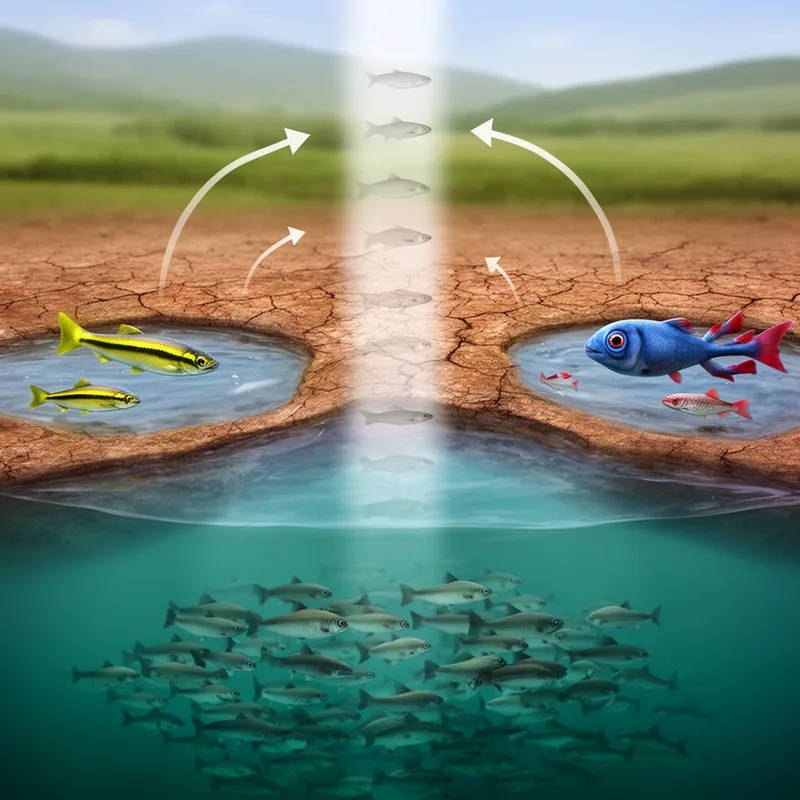
- Over many generations, isolated populations of fish can speciate and develop unique adaptations to their environments.
Examples
-
An isolated population may take a thousand years to speciate, and its transformation would therefore appear glacially slow if measured by the irrelevant scale of our personal lives.
Academic text (1992) -
Herrera does not use Aristotle's taxonomic language. Rather than speciate words, he subtly territorializes them.
Academic text (2002) -
I guess some plants can speciate in two generations, too?
Blog text (7) -
The vast majority of them have different DNA, so they are speciated away from us.
-
And the question was, did they come over from Africa separately or did they all speciate on Madagascar?
-
There are some new languages (creoles) that develop naturally within two generations, but I guess some plants can speciate in two generations, too?
Blog text (7) -
As part of MATES III, monthly composite PM2.5 filter samples were speciated, and the U.S. Environmental Protection Agency.
Academic text (2012) -
On this journey into wildly different environments, our kind didn't speciate, but we did end up forming groups or populations that are distinct in skin color, body size, and blood.
Academic text (2006) -
The taxonomic language at once speciates the literal significations of words and limits the boundaries within which metaphorical substitutions can be made.
Academic text (2002) -
Lineages of organisms split, or speciate, so that the single lineage that gave rise to life 3.5 billion years ago has undergone numerous splitting events to produce the millions of species alive today (and also the even more millions that went extinct).
Blog text (8)
Synonyms
 1
6.6
1
6.6
Spread into new places and form many new kinds
How Divergent

Surface Forms
Morphology
Etymology
The word speciate comes from the old Latin word species, meaning 'kind' or 'appearance', and is the same root as the English word species. So, to speciate is when a group of animals or plants becomes a new 'kind', a new species.