

spare change
 14
1.0
14
1.0

- noun
- /spɛr tʃeɪndʒ/
- Say, mister, you got any spare change?
- got some spare change
- begging for spare change
- asked for spare change
Loading YouTube…
Watch on YouTubeAcorns lets you get started with the spare money you've got right now, even if all you've got is spare change.
- Acorns lets you get started with the spare money you've got right now, even if all you've got is spare change.
Examples
-
After buying coffee, I had some spare change left over.
-
I always keep a little spare change in my boot.
-
Excuse me, have you got any spare change? - You got any--? -
-
Have you got any spare change?
-
You got any spare change, old man?
-
"Got any spare change?" the woman was saying.
Fiction book (1991) -
Look, I don't have any spare change.
-
I approached him and asked him for spare change politely.
-
Judy saved up her spare change and bought a beautiful globe with Cinderella's castle on it.
Blog text (4) -
Her kitchen always smelled of baking then, and she made dresses for poor children and gave all her spare change to beggars.
Fiction book (1996)
Synonyms
 382
1.0
382
1.0
Small coins or the money you get back after paying
 19
2.0
19
2.0
Money you keep to buy small things like coffee or snacks
 10
2.3
10
2.3
A small amount of money in coins that is not worth much
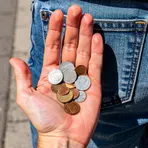 8
2.5
8
2.5
A small amount of money, usually coins, kept for minor expenses
 8
8.2
8
8.2
A very small amount of money that hardly matters next to bigger costs
 8
3.1
8
3.1
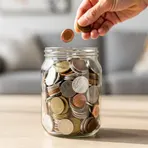
Small coins people keep in pockets or jars
How Much
453
2.8
 606
1.0
∞
1.0
14
1.0
8
3.1
606
1.0
∞
1.0
14
1.0
8
3.1
- Informal

 1
7.2
1
7.2
Surface Forms
Morphology
The meaning 'small coins left over' is directly and compositionally derivable from 'spare' (extra) + 'change' (coins). This adjective+noun combination follows a regular semantic pattern with clear cross-linguistic parallels, so a B1 learner who knows the constituent words will understand it.
Etymology
Spare change comes from the simple image of coins left over in a pocket or a jar. People often drop these coins for street performers or parking meters. So the phrase means 'small extra money' you carry and do not need for regular expenses, with spare meaning 'extra' and change meaning 'small coins'.