
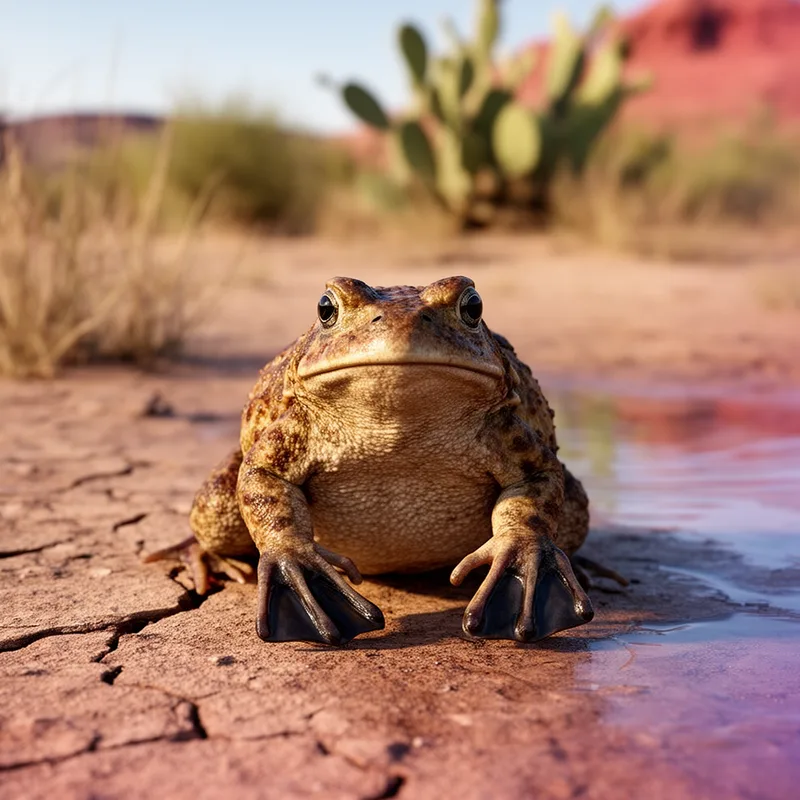
southern spadefoot
- noun
- /ˈsaʊðərn ˈspeɪdˌfʊt/
- US
- The southern spadefoot is well adapted to life in arid regions of the southwestern United States.
Examples
-
During the rainy season, southern spadefoots emerge from underground to breed in temporary pools.
-
A southern spadefoot can be identified by the spade-shaped projections on its hind feet.
-
The southern spadefoot is known for its unique burrowing behavior.
-
Many southern spadefoots can be found in the desert during the rainy season.
-
A southern spadefoot can be identified by the spade-shaped projections on its hind feet.
-
During the rainy season, southern spadefoots emerge from underground to breed in temporary pools.
-
The southern spadefoot is well adapted to life in arid regions of the southwestern United States.
Surface Forms
Morphology
The noun phrase combines the geographic adjective 'southern' with 'spadefoot' (a burrowing toad), so the meaning — the spadefoot species found in the south/southwestern region — is directly derivable from its parts. This straightforward modifier+noun composition is a common, cross-linguistic pattern, so a B1 learner who knows both constituents would understand the MWE.
Etymology
Southern spadefoot gets its name from the toad's back feet, which have a spade-like shape used for digging, and from the 'southern' area where it lives. So the name points to a digging toad found in the southwestern United States.

