
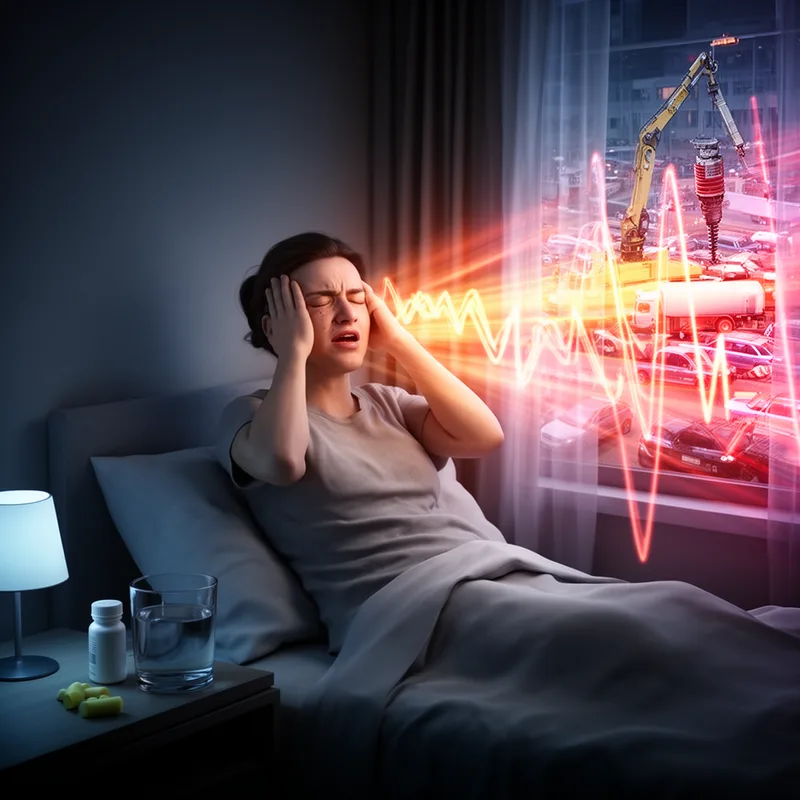
sound pollution
- noun
- /saʊnd pəˈluːʃən/
- The city's sound pollution affects the health and well-being of those living nearby, making it difficult to enjoy outdoor spaces.
Examples
-
In urban areas, increasing traffic contributes significantly to sound pollution, disturbing the peace for residents.
-
Chickens cause much less noise compared with regular urban sound pollution.
Blog text (8) -
Two of the main challenges to observing and listening to this nocturnal spectacle, particularly in an urban setting, are city lights and sound pollution.
Blog text (21) -
Efforts to reduce sound pollution include implementing quieter public transportation systems and creating green spaces.
Synonyms

 ∞
1.0
∞
1.0

A loud, unpleasant sound that disturbs you
 28
3.9
28
3.9
Loud, unpleasant noise that continues and comes from many sources
 5
3.1
5
3.1
How loud unwanted background sound is
 3
3.2
3
3.2
Loud or unwanted sounds made by people that bother others and can harm health


 1
2.5
1
2.5
Loud sounds that continue and make it hard to think or sleep

A loud, constant noise that makes it hard to think
Antonyms

How Harmful

Surface Forms
Morphology
The meaning 'unwanted or harmful noise' is directly derivable from combining 'sound' (noise) with 'pollution' (harmful contamination), following the productive noun+pollution pattern seen in phrases like 'air pollution' and 'light pollution'. This compositional and cross-linguistically common pattern makes the term immediately comprehensible to a B1 learner who knows both constituents, even if 'noise pollution' is the more frequent collocation.
Etymology
Sound pollution paints a simple picture: loud sound fills the air like dirty smoke from a factory, so the place becomes 'polluted' by noise. So it means 'unwanted or harmful noise' that disturbs people or can hurt their health.