
sorbic acid


 1
5.5
- noun
- /ˈsɔrbɪk ˈæsɪd/
- Specialized
- Its inside consists of table sugar, high-fructose corn syrup, water, corn flour, and sorbic acid, an anti-mold agent.
Examples
-
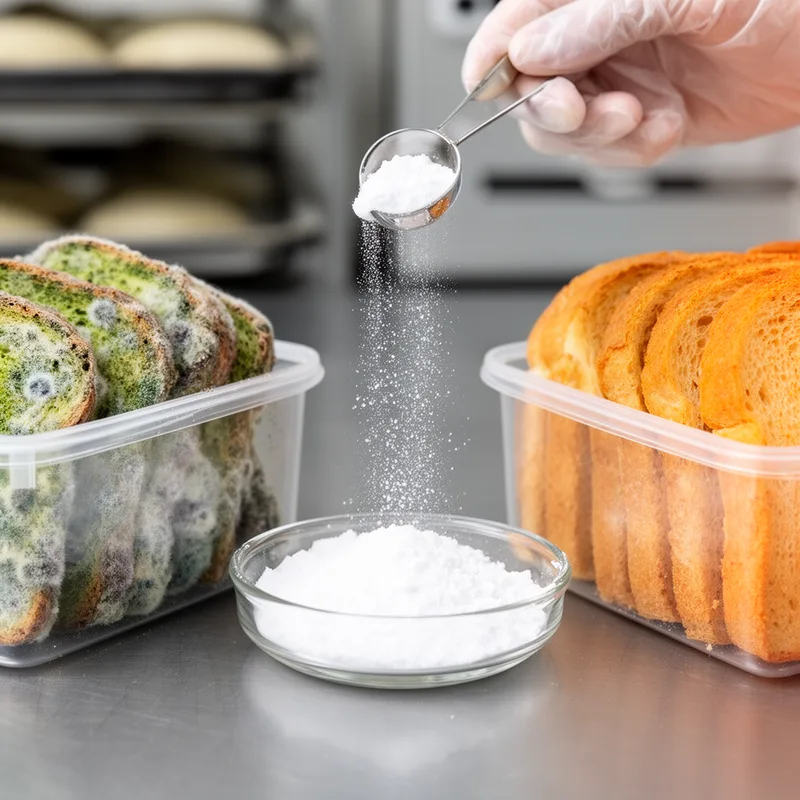
Many bakeries add sorbic acid to their bread recipes to improve shelf life by inhibiting fungal growth.
-
You can find sorbic acid in jams and jellies to help maintain their freshness and flavor.
-
Sorbic acid is commonly used in food products to prevent spoilage caused by sorbic acid, molds and yeasts.
Surface Forms
Morphology
The phrase is compositionally built: 'sorbic' modifies 'acid', so a learner who knows both words can infer it is a particular kind of acid. However, the specific chemical properties and its role as a food preservative are specialized, non‑predictable information beyond the literal meanings of the constituents, so the transparency is only partial.
Etymology
Sorbic acid comes from the rowan tree: 'sorbus' is the Latin name for rowan because chemists first found this kind of acid in rowan berries. So the part sorbic points to those berries and the part acid tells you it is an acid, which makes sorbic acid easy to remember as a 'preservative' used to keep food from mold.