
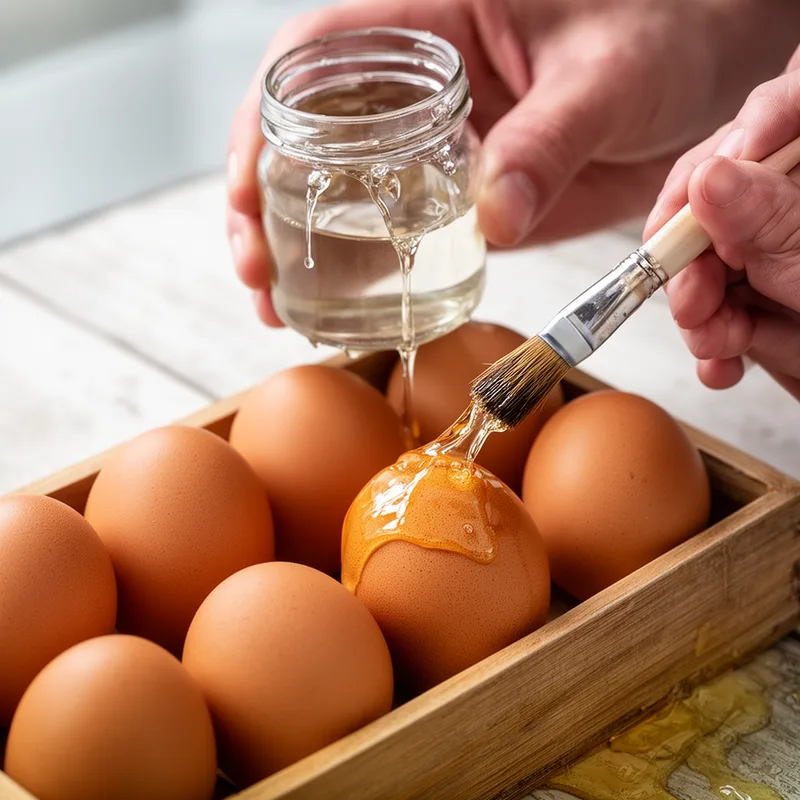
soluble glass
- noun
- /ˈsɒljʊbəl ɡlæs/
- Specialized
- Farmers once used soluble glass to preserve eggs before refrigeration was common.
Examples
-
Coating the wood with soluble glass helped protect it from moisture and fungi.
-
The laboratory used soluble glass as a cement for holding the tiles together.
-
The laboratory used soluble glass to seal the cracks in the ceramic tiles.
-
The artist used soluble glass for her sculpture.
-
Is soluble glass safe for food preservation?
-
Farmers once used soluble glass to preserve eggs before refrigeration was common.
-
Coating the wood with soluble glass helped protect it from moisture and fungi.
Synonyms
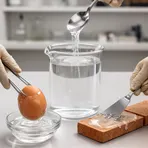
A clear thick liquid used as cement and for preserving eggs

A glass-like liquid that seals and protects things like concrete and preserves eggs
Surface Forms
Morphology
A B1 learner who knows 'soluble' and 'glass' can infer a rough idea — something like a glassy/substance that can dissolve — so the compound is partially analyzable. However, the established meaning refers to a specific chemical (sodium silicate) and a viscous solution used as a cement/coating, which is a technical, non-literal extension from solid 'glass' and therefore not fully predictable without exposure.
Etymology
Soluble glass comes from the idea of a kind of glass that is soluble, meaning it can dissolve in water and make a sticky, glue-like liquid. People used that liquid to coat, seal, or 'preserve' things like wood and eggs, so the name now means a dissolving, protective 'glass' used to cover, protect, or join materials.

